What Weight Jig Should I Use? A Practical Jig Weight Guide
What weight jig should you use? Start with the lightest jig that will reliably reach the fish and let you maintain contact with it. Then adjust for current, wind, boat drift, braid diameter, jig shape and how tightly the fish are holding to the structure.
That sounds simple, but one day at Texas Reef off Sydney gave us a particularly good demonstration of why jig weight cannot be chosen from depth alone. In a 1 to 2 knot current, Andrew Hestelow's 100 g jig on lighter, thinner braid was reaching the kingfish faster than the usual 250 g setup on heavier line. The lighter outfit was not just easier to use. On that day, Andrew reported hooking up roughly twice as often.
This guide explains why that happened, when the same idea is useful and, just as importantly, when you should go heavier instead.
The Quick Answer: Choose Jig Weight by Control, Not Depth Alone
There is no universal rule saying a particular depth always requires a particular jig weight. Depth is important, but the real test is whether your jig can reach and repeatedly pass through the strike zone while you remain in useful contact with it.
| Condition | Weight decision | Why |
|---|---|---|
| Jig drops close to vertical and reaches the fish quickly | Stay with the weight, or consider lighter if the tackle and target allow | You already have good depth control |
| Line sweeps away before the jig reaches the marks | Go heavier, reduce line drag where appropriate, or improve boat positioning | The jig is spending too little time in the strike zone |
| Fish are tight to a small pinnacle or narrow depth band | Prioritise fast, repeatable delivery to that exact zone | A slow descent may put you past the fish before you start jigging |
| Heavy setup is exhausting you | Lighten the jig and outfit only if you can still reach the fish and safely fight them | A comfortable setup keeps you fishing effectively for more drops |
The Texas Reef Experiment: 100 g vs 250 g
On the June long weekend in 2020, Andrew joined James Taylor aboard his 32-foot Blackwatch, Black Rat. The original plan was to fish wrecks near Long Reef, but a late tip sent the boat north to Texas Reef instead.
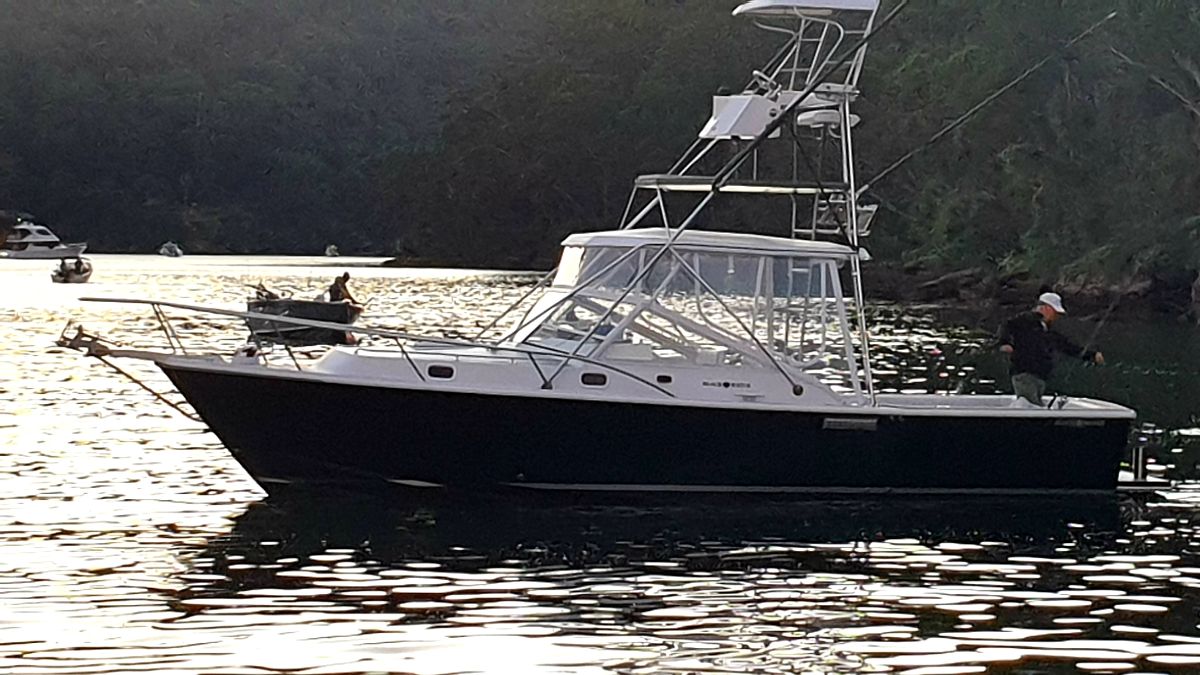
They arrived to find multiple boats working the kingfish marks. The water was clear and about 18 degrees, with a 1 to 2 knot current from the north pushing against a medium southerly. The kingfish were not spread across the reef. They were stacking over only two of its many pinnacles.
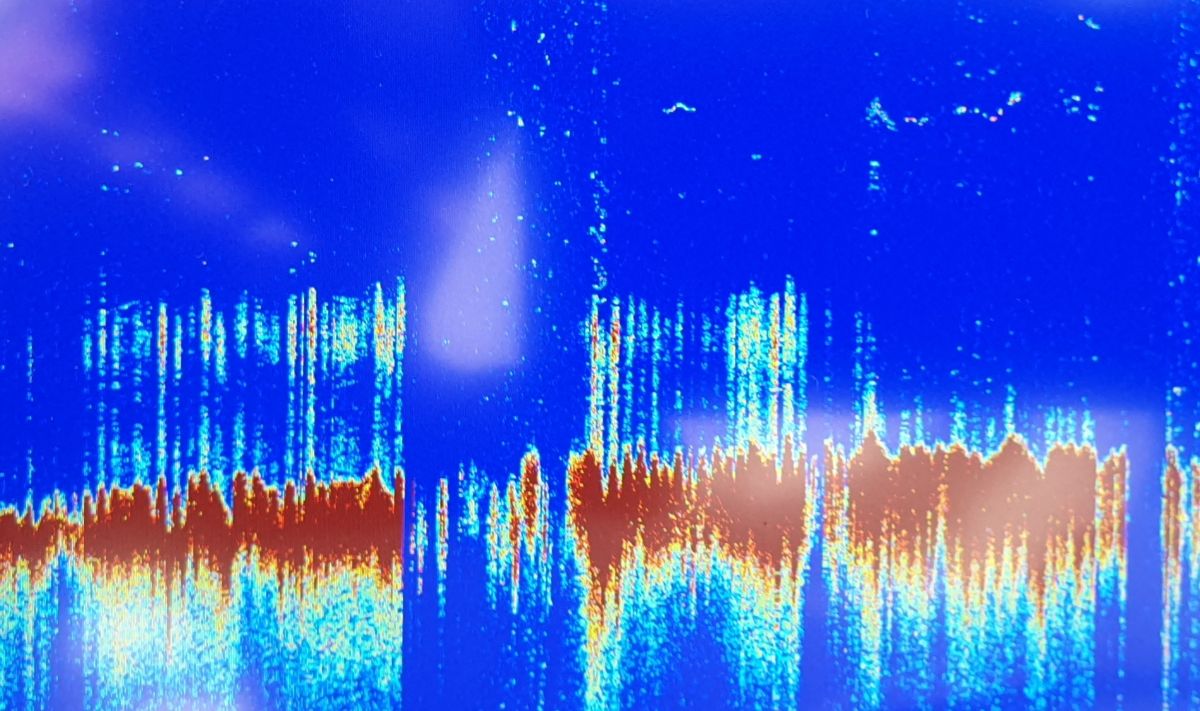
Andrew would normally fish Texas with a 250 g jig and 24 kg tackle. This time he changed to a much lighter jigging outfit and a 100 g jig. His reasoning was that the thinner braid and smaller jig would present less resistance to the moving water, while the lighter outfit would also be easier to jig for an extended session.
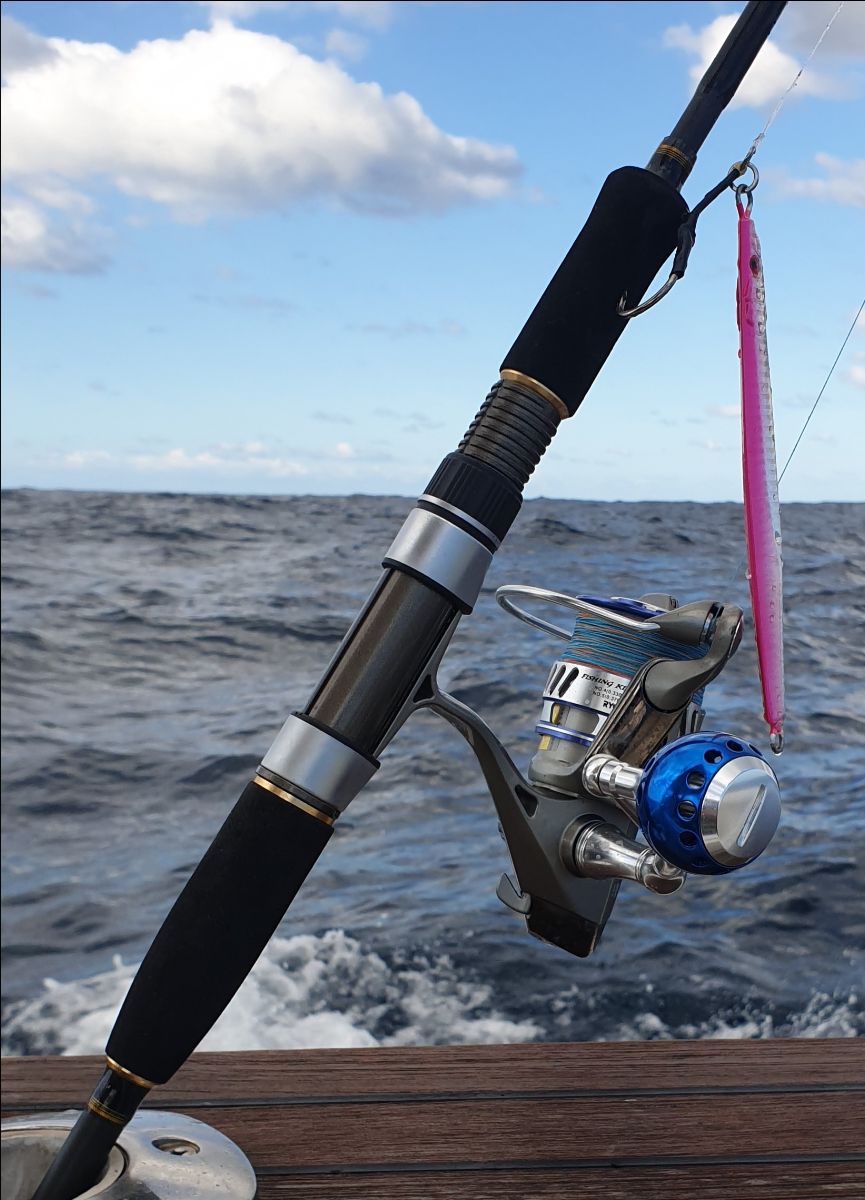
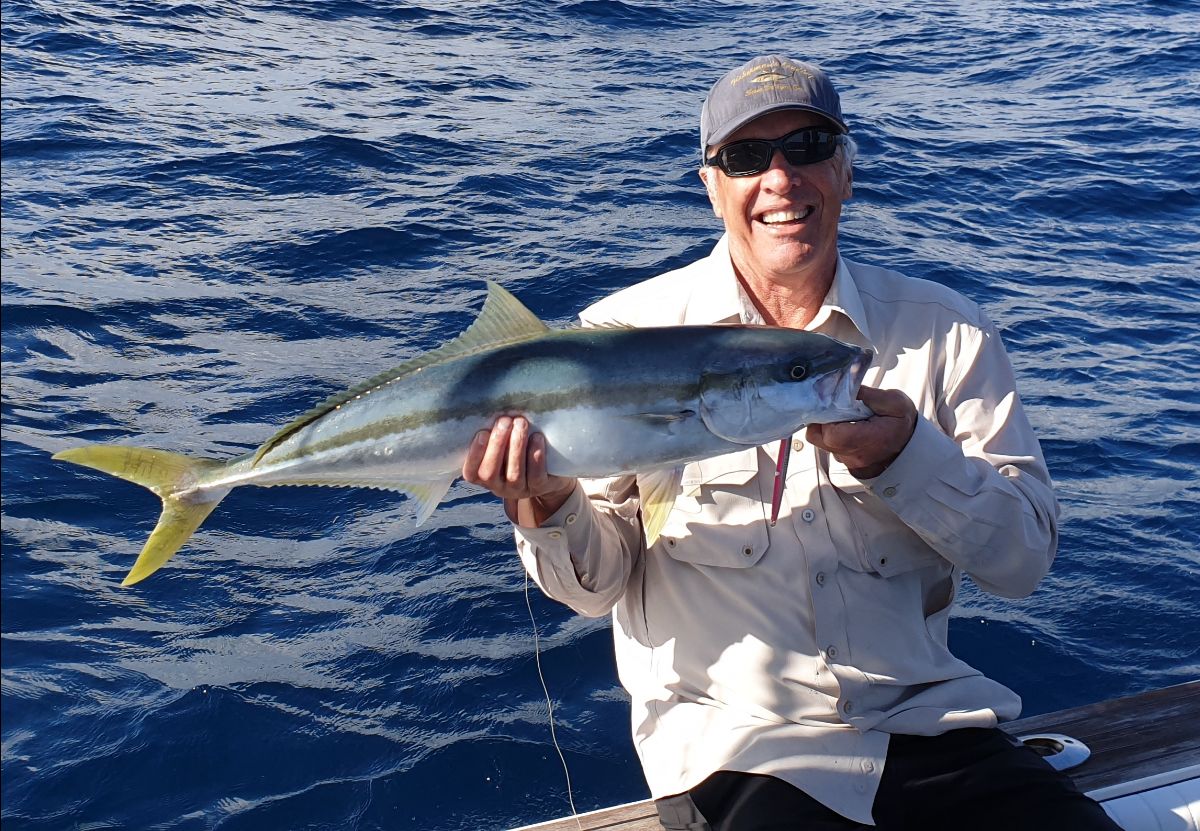
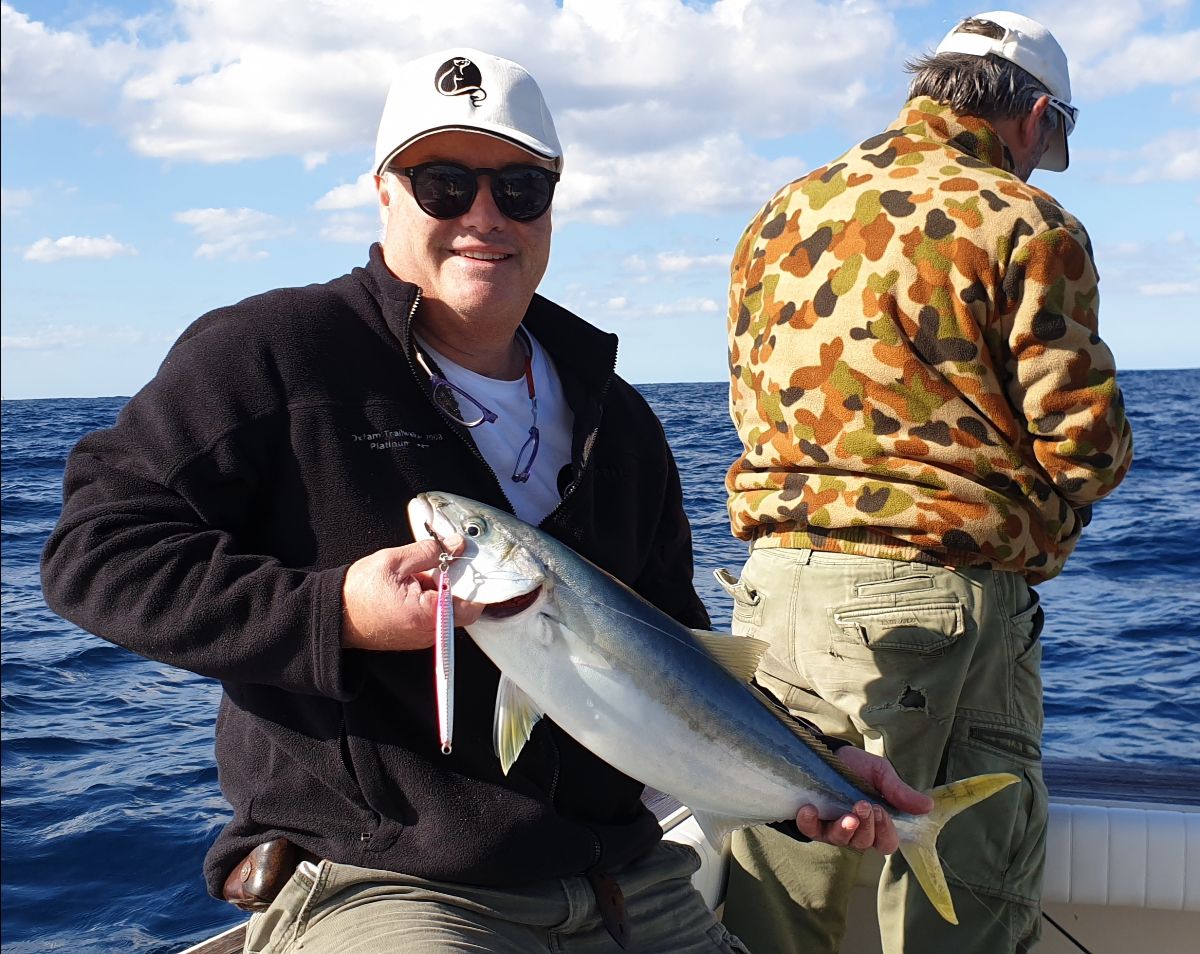
The result surprised him. The 250 g jigs on the heavier line were travelling down at a shallow angle as current loaded the thicker braid. The 100 g jig on the light setup was reaching the fish faster. Andrew's observation at the time was that this gave him more productive drops and roughly twice as many hookups.
The lesson was not that 100 g always sinks faster than 250 g. A heavier jig has more downward force. The lesson was that the complete system matters. In that particular current, drag on the heavier braid was enough to make the heavier setup less effective at getting a jig onto those tightly held fish.
Why Can a Lighter Jig Sometimes Reach the Fish Better?
When you drop a jig, the lure is not moving through still water on an isolated length of line. Current acts on the jig and on every metre of braid below the boat. As more line enters the water, the amount of line exposed to that moving water increases.
Thicker braid generally presents more area to the current than thinner braid. That extra drag can pull the line sideways, increase the angle between the boat and jig and reduce how efficiently the system gains vertical depth. Wind and boat drift can add another layer by moving the boat relative to the water.
That is why changing from 100 g to 250 g is not the only way to improve depth control. Depending on the fish, structure and tackle class, a thinner main line, a more streamlined jig shape, better drift positioning or a combination of those changes can also help.
This is not unique to our old Texas Reef test. Modern specialist knife jigs are still deliberately designed around reducing resistance in current. The exact sink behaviour varies with jig profile and balance, so two 100 g jigs can behave differently even though the number stamped on them is identical.
The Five Variables That Should Decide Jig Weight
1. Where the fish are, not just the bottom depth
A boat sitting in 100 metres does not automatically need a jig selected for 100 metres if the fish are suspended at 45 metres. Read the sounder and identify the actual depth band you need to fish.
The opposite is also true. If the fish are tight to the bottom on a deep reef, your jig needs to get all the way there while you still have enough control to work it properly.
2. Current
More current generally means more drag on both line and lure. If your jig is being swept away before it reaches the target, add weight or reduce unnecessary water resistance where your overall tackle system safely allows.
3. Wind and boat drift
Current moves the water. Wind moves the boat. Sometimes they work in the same direction and sometimes, as at Texas Reef, they oppose one another. What matters to the angler is the resulting relationship between boat, line, jig and fish.
Plan the start of the drift so the jig reaches fishing depth as the boat approaches the marks. If you wait until you are directly over a small pinnacle before beginning a slow drop, the boat may be well past it by the time your jig arrives.
4. Braid diameter
Braid is excellent for vertical jigging because it combines high strength with relatively low diameter and low stretch. But PE rating, stated breaking strain and actual diameter are not interchangeable across every line brand. Think in terms of the line you genuinely need for the fish and structure, rather than automatically choosing the thickest main line you can fit.
Do not lighten line just to make a jig sink faster if doing so leaves you under-gunned for rough structure or large fish. Depth control is only useful if the rest of the system can land the fish.
5. Jig shape
Weight alone does not determine sink rate. A narrow knife jig is designed to cut through the water efficiently. A broad, centre-balanced or strongly fluttering jig may deliberately slow or wander on the fall. That can be an advantage when fish respond to a slower presentation, but it changes how much weight is required to hold the same depth and line angle.
A Practical Knife Jig Weight Guide
Rather than pretending there is a universal grams-per-metre formula, this is how we would think about common knife-jig weights. Start with the conditions, make a drop and adjust from what the line and sounder tell you.
| Weight | Useful starting situation | When to move heavier |
|---|---|---|
| 10 g | Very light lure fishing, shallow water and small bait profiles | As soon as current or depth stops you controlling the lure |
| 40 g | Micro jigging and shallower inshore or offshore structure | When the line angle grows or the jig cannot reach the fish cleanly |
| 100 g | A versatile offshore starting point in manageable current. Much of our own Sydney use has been around 40 to 60 metres | When current, drift or greater target depth stops it staying in the productive zone |
| 150 to 200 g | The middle ground when 100 g is losing control but a full 250 g is unnecessary | When the target is deeper, current increases or the drift becomes faster |
| 250 g and heavier | Deeper reefs, stronger current and small targets where a fast descent is critical | Go heavier only when conditions demand it and your rod and reel are rated to work the weight |
Important: These are condition-based starting points, not depth limits. A streamlined 100 g jig on thin braid in calm water can be more useful at depth than a table suggests, while the same jig may be hopeless much shallower in hard current and fast drift.
When 100 g Is the Better Choice
A 100 g knife jig is particularly useful when it reaches the fish without developing a large line angle. It is heavy enough for serious boat-based jigging, but light enough to work comfortably on a balanced outfit for repeated drops.
That combination is why we have used 100 g jigs so much around Sydney's moderate-depth reefs and wrecks. It also makes them a useful weight to have aboard when the current eases, even if you started the session with something heavier.
When 250 g or More Makes Sense
Do not turn the Texas Reef result into a rule that lighter is always better. There are plenty of days when a 100 g jig simply will not stay where it needs to be.
Heavier jigs come into their own when you are working deeper water, hard current, fast drift or compact structure. On small offshore pinnacles, you may have only a short window in which the boat is positioned correctly. A heavy, fast-sinking knife jig can put the lure into the strike zone before that window closes.
Our 2022 Jigs Brings Kings trip gives a good Sydney example. At Texas Reef we used 250 g jigs because the kingfish were holding tight to small pinnacles and getting down quickly was more important than fishing the lightest possible lure. On the shallower Peak, 100 g was a practical option. Same technique, different conditions, different answer.
Use Line Angle as Your On-Water Test
If you remember only one practical test from this guide, make it this: watch the angle of your line.
- Mark the fish and note their depth.
- Position the boat so the drift will carry you across the marks.
- Drop the jig and watch how the line enters the water.
- If the jig reaches the target quickly and the line remains reasonably close to vertical, start fishing.
- If the line sweeps farther away while the jig is still descending, increase weight or reconsider the line, jig profile and boat position.
- If the setup reaches the zone easily but feels unnecessarily heavy, try a lighter jig on the next drop and compare.
This gives you a live answer for the water you are actually fishing, not a number copied from a chart that cannot know the day's current or drift.
If you reach a familiar GPS mark but the screen is quiet, our guide to using public fishing marks explains how to separate finding useful ground, finding fish and reaching them with your bait or jig.
Do Not Forget Angler Fatigue
Mechanical and high-speed jigging can be hard work. A heavier lure and outfit may give excellent depth control but still be the wrong choice if it becomes too tiring to fish effectively.
The Texas Reef trip demonstrated both sides of the equation. The light setup reduced line drag and, in those conditions, improved delivery to the fish. It was also much more comfortable to jig. That meant Andrew could keep making effective drops while the bite was slow.
Comfort is not an excuse to fish tackle that is too light for the structure or target species. It is another variable to balance. The goal is an outfit capable of landing the fish that you can also work properly for the length of the session.
Frequently Asked Questions
What weight jig should I use in 50 metres of water?
There is no automatic answer, but 100 g is a useful starting point for the style of offshore jigging we do when current and drift are manageable. If the jig is being swept away from the fish, step up in weight. If it drops cleanly and stays controlled, there is no reason to add weight simply because a chart tells you to.
Is a heavier jig always faster sinking?
Not as a complete fishing system. All else being equal, extra jig weight increases the force pulling the lure down. But line diameter, line length in the water, current, boat movement and jig shape all affect the actual path and effective descent. Our Texas Reef test is a real example where a 100 g jig on thinner braid reached the fish more effectively than a 250 g jig on heavier line.
Can I use a 100 g jig in deep water?
Yes, if conditions allow it to reach and stay in the target zone. Depth alone does not impose a fixed maximum. In strong current or fast drift, however, a heavier jig may be far more effective even in shallower water.
Does thinner braid mean I should always fish lighter line?
No. Use line appropriate to the fish, structure, reel and drag pressure. Thinner braid can reduce water resistance, but that benefit is irrelevant if the line class is inadequate for the fishery. Balance sink efficiency with the strength and abrasion margin you genuinely need.
Does jig shape change the weight I need?
Yes. Slim knife jigs are designed to cut through the water efficiently. Wider or fluttering jigs create more resistance and may descend differently at the same nominal weight. Compare how the actual lure fishes rather than choosing by grams alone.
Choose the Weight That Keeps You Fishing the Strike Zone
The best jig is not automatically the heaviest one you can work or the lightest one that feels comfortable. It is the jig that repeatedly gets into the fish's depth band with enough control to present it properly.
Start with depth, then account for current, drift, braid and jig shape. Watch the line angle on the first drop. Adjust until you can reach the marks efficiently. That is a much more reliable way to choose jig weight than memorising a fixed depth chart.

Ready to Choose a Jig?
Browse our knife jig range by weight, or see the current 100 g knife jig 10-pack for a versatile offshore option.
If you are new to the technique itself, our How to Get Started with Jigging for Kingfish in Australia guide covers sounder use, tackle, rigging, drift, jigging rhythm and fighting fish.
Original field report: Andrew Hestelow, Texas Reef, June 2020. This guide preserves the observations and original trip photography while updating the surrounding advice for a broader jig-weight selection resource. Product designs and tackle shown in archive photographs may differ from current stock.
Also in Tackle News


Target: Kingfish
Two Sydney offshore sessions targeting kingfish with live yellowtail and heavy knife jigs, including fish to one metre, sharks and an amberjack.


Mackerel, Kingfish and Sharks
TUESDAY! Wanted to downrig small live bonito around Long Reef for a stud kingfish. Our purple trolling lures accepted the challenge:


