



$75.00 AUD
| /
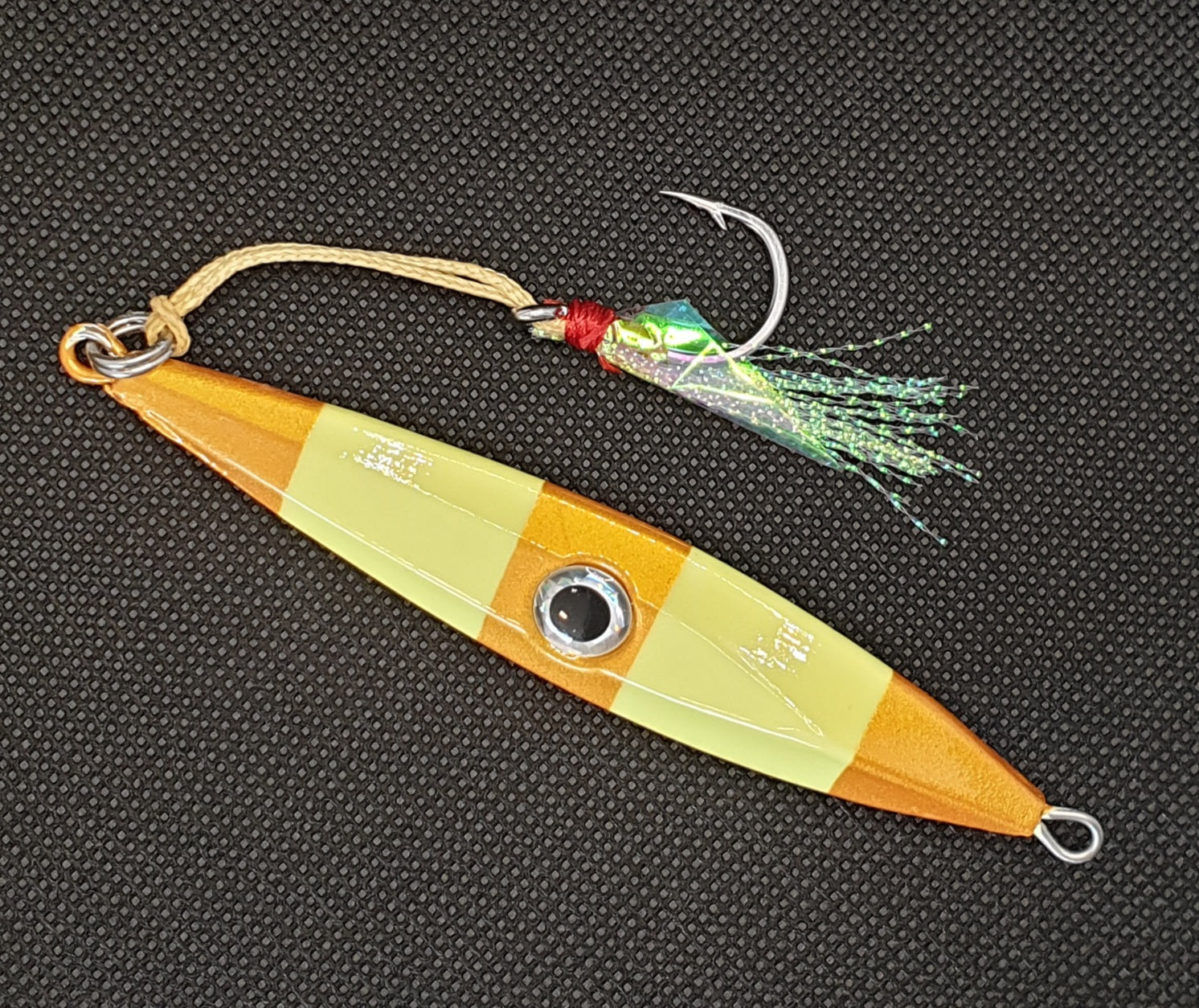
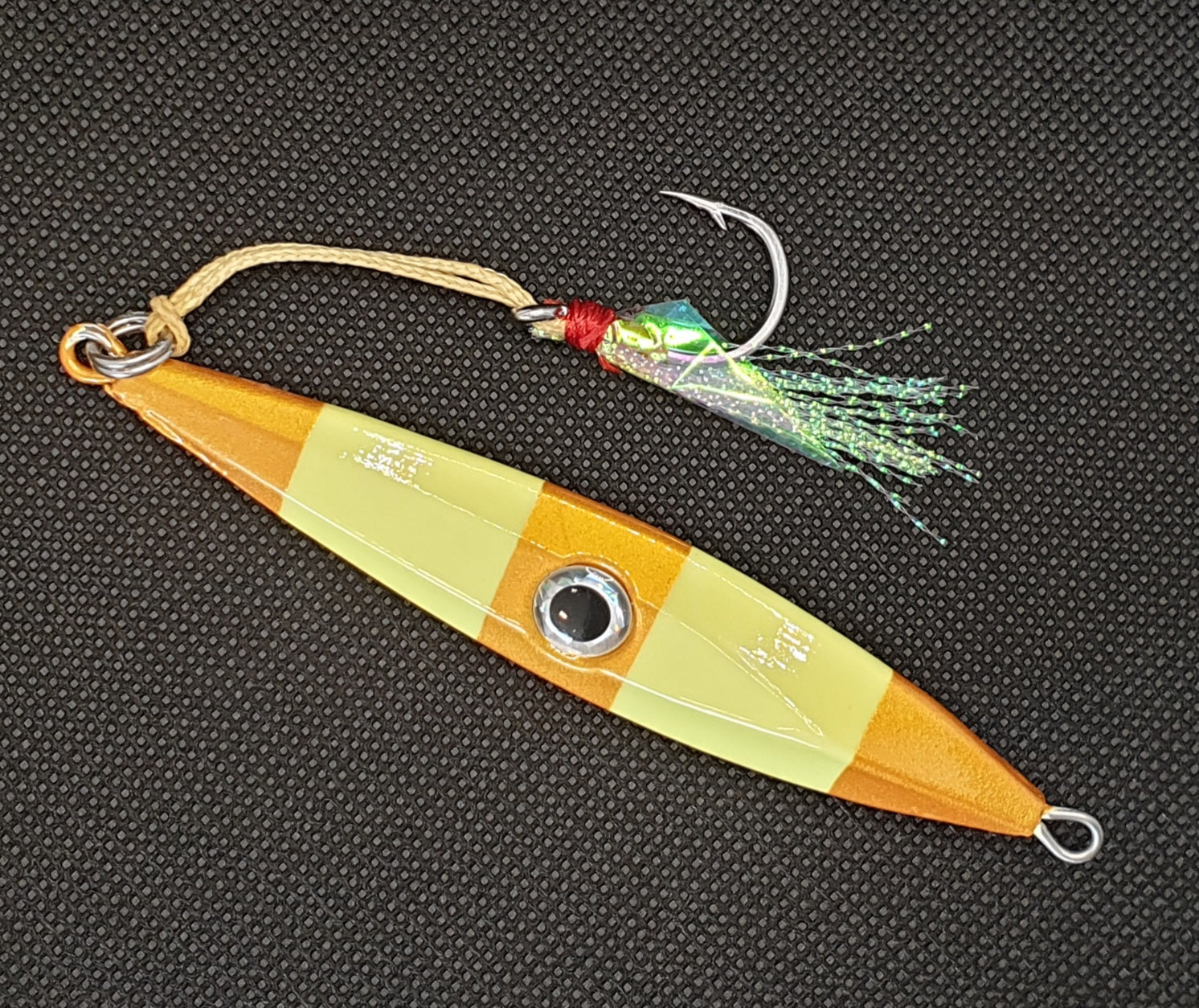
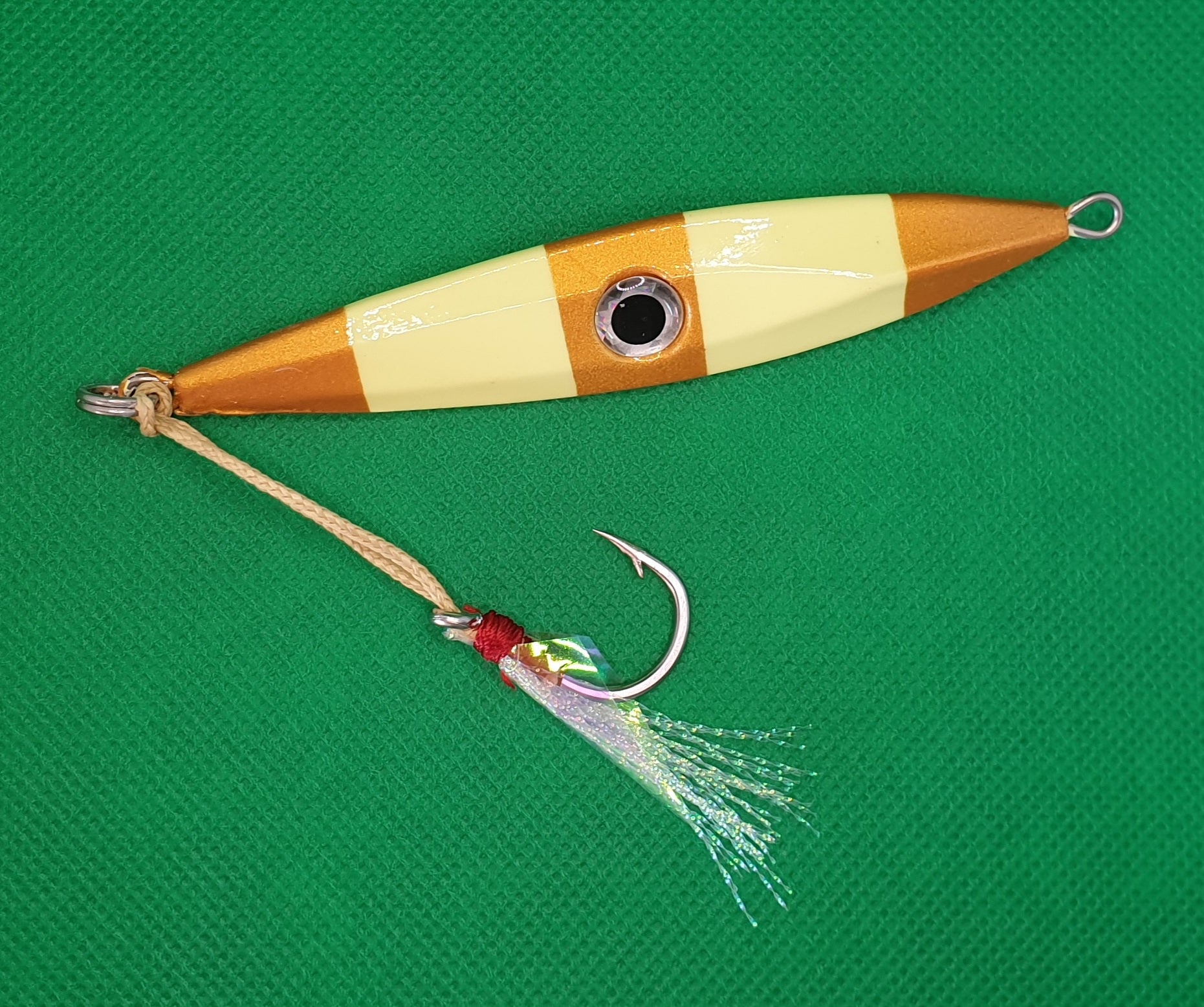
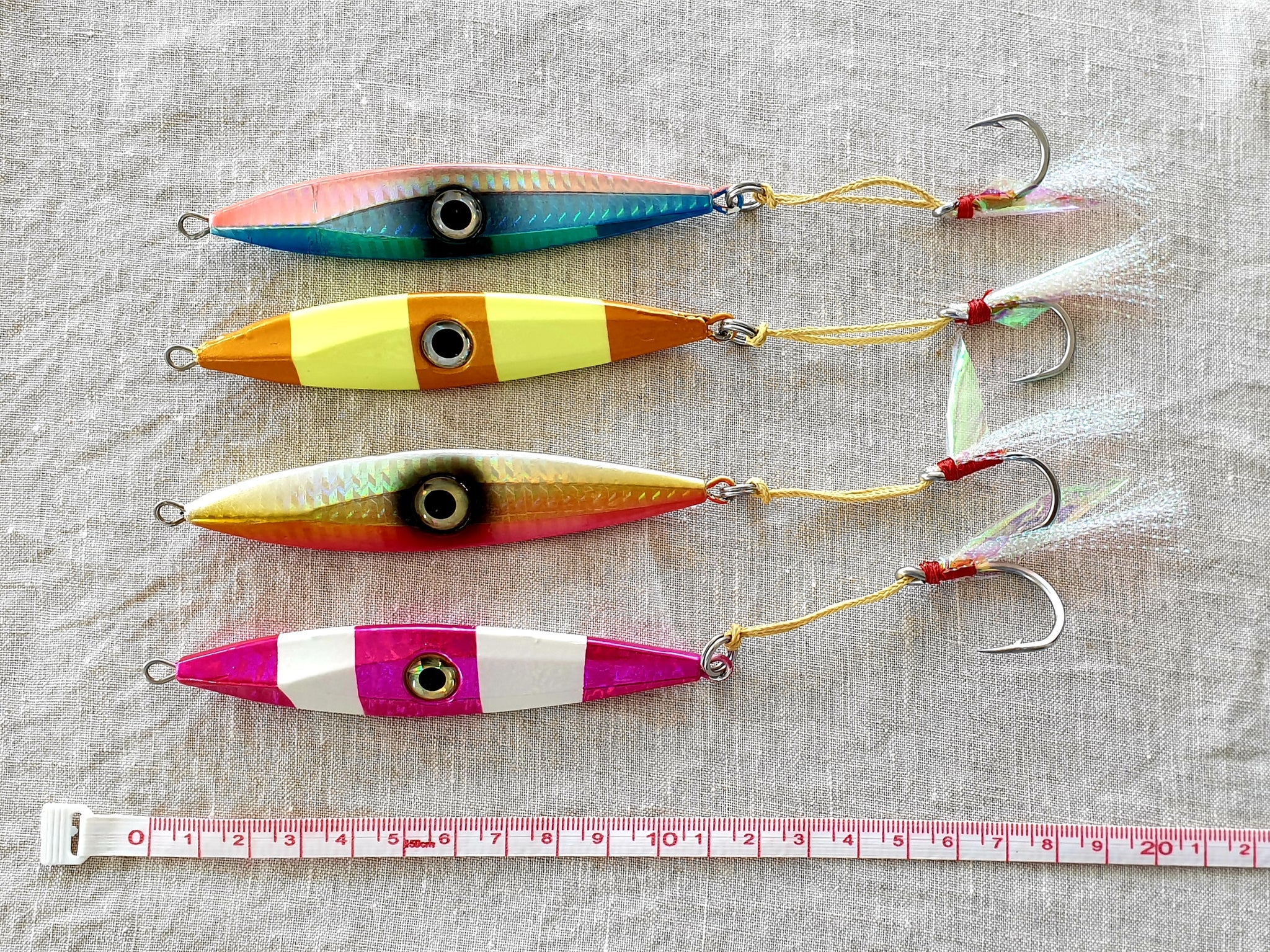
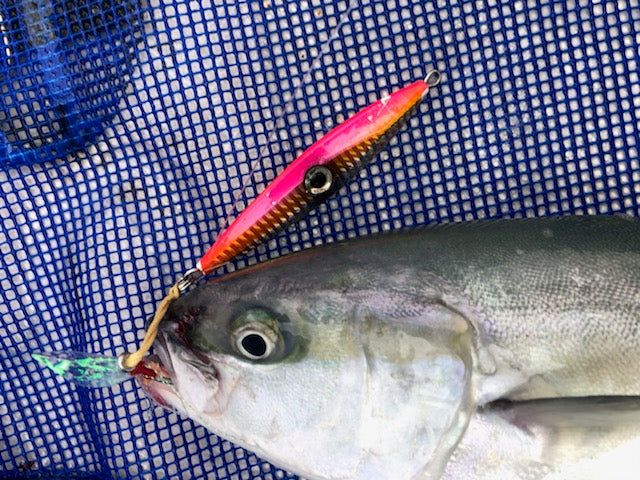
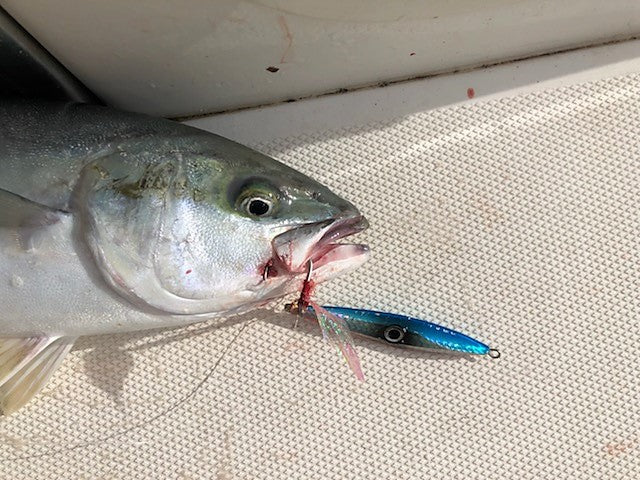
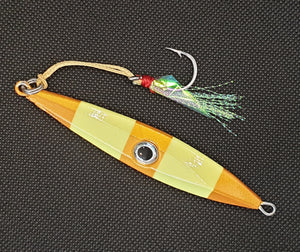
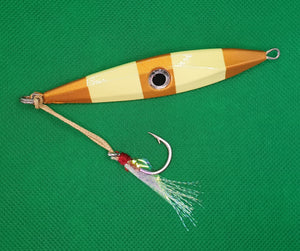
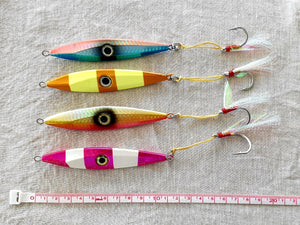
Ten 100 g knife jigs, rigged and ready to fish. This assorted pack contains two each of five colours: Blue, Orange, Silver, Black and Pink. Each jig has reflective prismatic sides, a prominent eye and a single assist hook on heat-shrink protected cord.
- 10 x 100 g knife jigs
- 2 each of 5 assorted colours
- Single assist hook included on every jig
- Heat-shrink protected assist cord
- Prismatic reflective finish
- Well suited to vertical jigging for kingfish and other offshore predators
- Delivery included within Australia
For anglers fishing reefs, wrecks and offshore structure, 100 g is a very useful jig size to have ready when depth, current and drift allow you to stay reasonably vertical.

100 g Knife Jigs for Kingfish and Offshore Jigging
Knife jigging is simple in principle: get a metal jig into the zone where predatory fish are holding, then make it look like a baitfish trying very hard not to be eaten. The difficult part is choosing a jig heavy enough to reach and stay in that zone without making the tackle unnecessarily tiring to fish.
For years we have used 100 g jigs around Sydney reefs and wrecks, particularly in roughly 40 to 60 metres of water. They have also been used by Downrigger Shop customers around Australia on kingfish, amberjack, Samson fish, Spanish mackerel and other reef and pelagic species. That does not mean 100 g is the right weight every day. Strong current, fast drift or deeper water can demand a heavier jig, while shallower or calmer water may allow you to go lighter.
Why Fish a 100 g Jig?
A 100 g metal jig sits in a very useful middle ground for boat-based offshore jigging. It has enough weight to sink quickly through a moderate water column, but it is still comfortable to work on appropriately matched tackle. That matters because jigging rewards time in the strike zone. A jig that exhausts you after a handful of drops is not helping.
Our starting point is simple: use the lightest jig that will reliably reach the fish and let you maintain useful contact with it. Watch your line angle. If the jig is sweeping well away from the boat before it reaches the target depth, step up in weight. If it is dropping cleanly and you can work it through the marks on the sounder, 100 g may be all you need.
The Current Downrigger Shop 100 g Jig
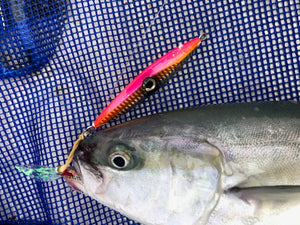
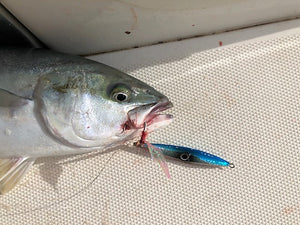
We changed from our older slimline 100 g jig to the current body shape in 2022. Rather than relying on a catalogue description, Andrew took the new version offshore and put it in front of Sydney kingfish. The fish answered the question for us.
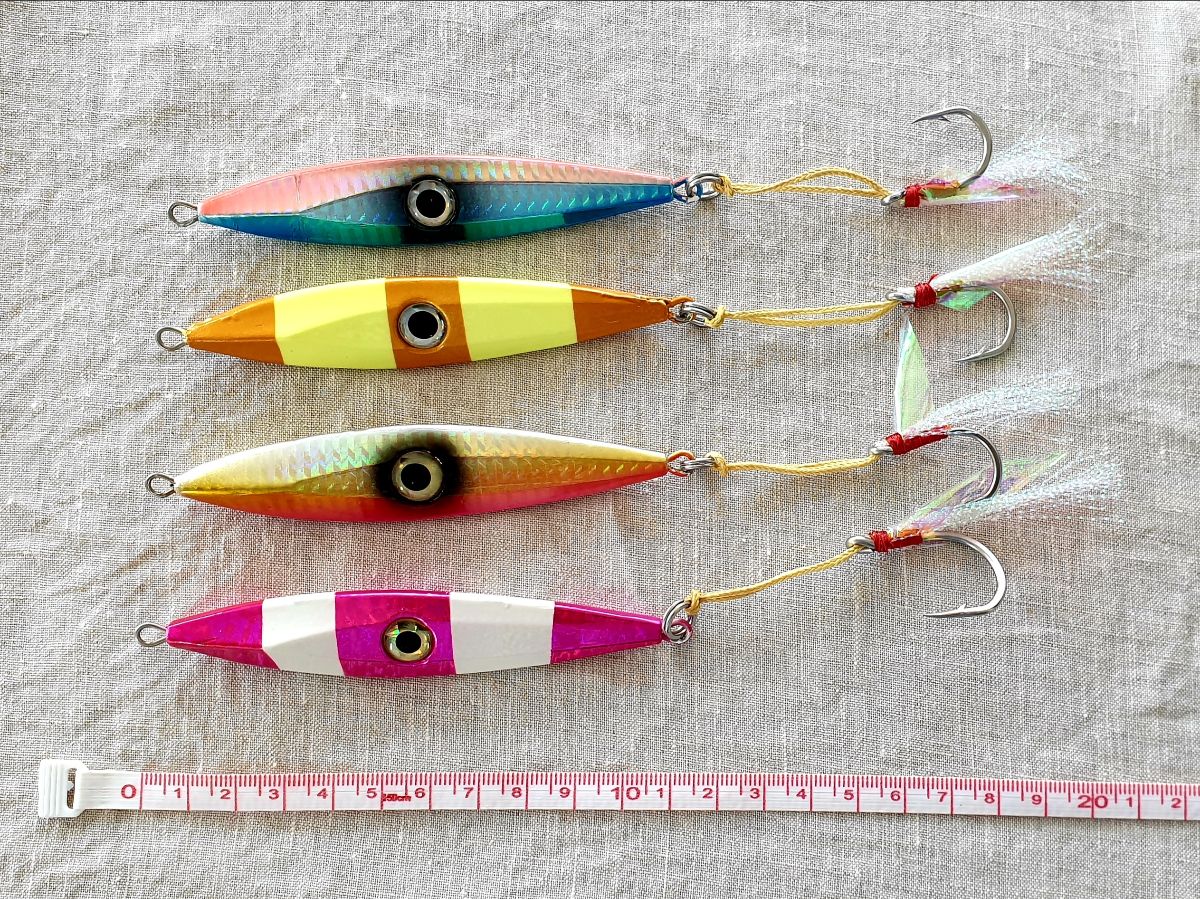
The jig carries a prominent eye, reflective prismatic finish and a single assist hook positioned at the head. The assist cord is protected with heat shrink to help resist abrasion. Each ten-pack gives you two of every colour, so you can change colour without needing a second order when the fish show a preference.
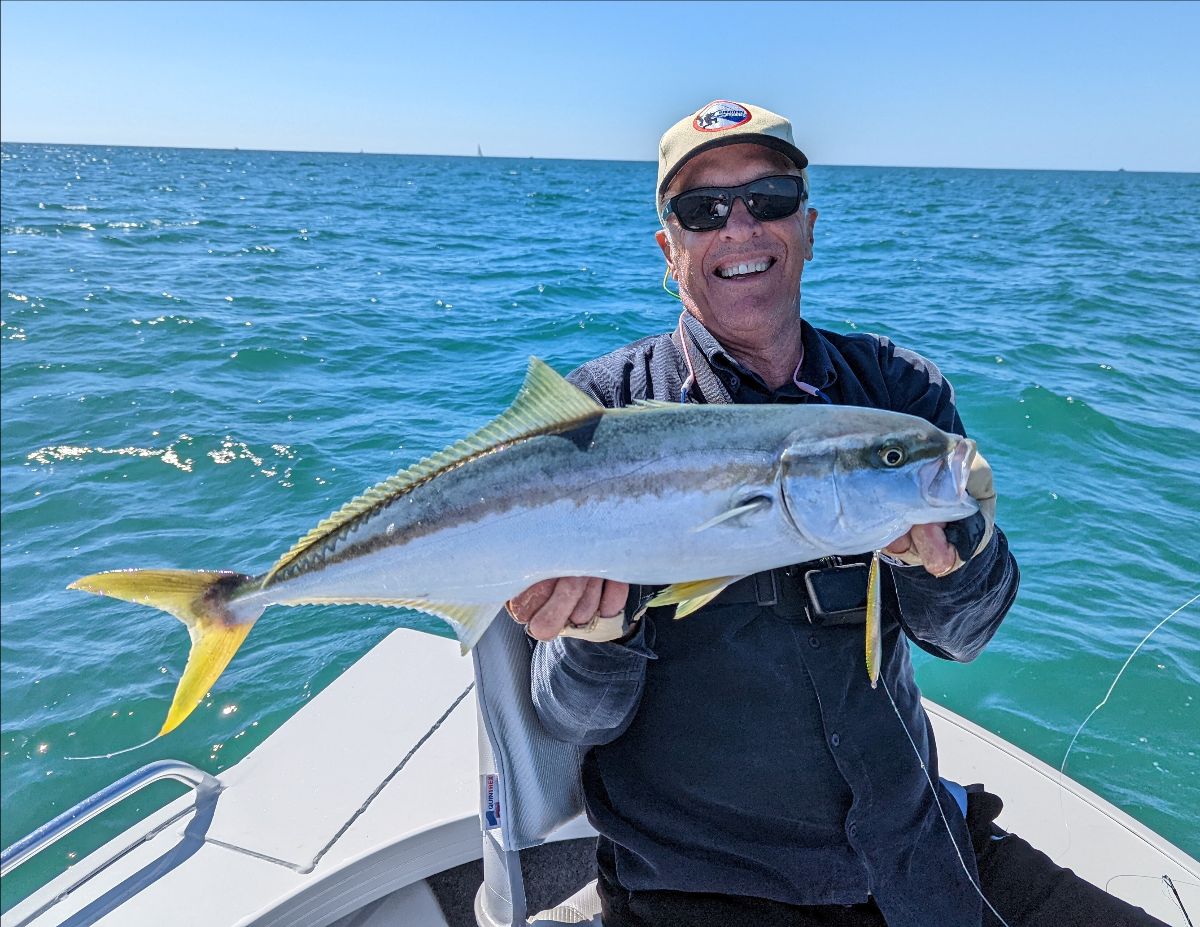
If you want the full story behind that change, read Jiggin' the Disco Biscuit. It documents the first trip where Andrew deliberately put the new shape to work.
What Can You Catch on a 100 g Knife Jig?
Kingfish are the obvious target in our part of the world, and they are the species behind much of our own testing. But a metal jig moving through a bait school does not carry a kingfish-only sign.
Over the years, customers fishing our 100 g jigs and earlier versions of the range have reported kingfish around Sydney, Samson fish and amberjack in Queensland, plus Spanish mackerel, yellowfin tuna, coronation trout and other reef species further north. We have moved much of that older catch photography into our jigging guide, where it is more useful for showing how versatile the 100 g weight class can be.
Five Colours in Every Pack
Each pack contains two Blue, two Orange, two Silver, two Black and two Pink jigs. Colour is not the first variable we change when the jig is missing the strike zone, but once weight and presentation are right it is worth rotating colours if fish are marking but not committing.
Silver is an obvious baitfish-style starting point. The contrasting brighter and darker finishes give you options as light levels, water clarity and fish behaviour change through a session.
How to Fish These Knife Jigs
For classic vertical jigging, position the boat so your drift takes you across the fish or structure rather than rapidly away from it. Drop the jig to the marked depth, engage the reel and work it upward with coordinated lifts of the rod and turns of the handle. Vary the speed and length of the stroke until you find what the fish respond to.
Do not automatically send the jig all the way to the bottom. If the sounder shows kingfish suspended above a reef, use line markings or your depth awareness to put the jig through that band. Working the water where the fish actually are is both more efficient and less likely to snag.
New to the technique? Our expanded How to Get Started with Jigging for Kingfish in Australia guide covers tackle, jig weight, sounder use, drift, technique, fighting fish and common beginner mistakes.
100 g or a Heavier Jig?
| Conditions | What to consider |
|---|---|
| Moderate depth, manageable drift | 100 g is a useful starting point if it reaches the fish and stays reasonably vertical. |
| Strong current or fast drift | Move heavier if the jig is being swept away from the strike zone. |
| Deeper water | A heavier jig may reach the target depth faster and give better contact. |
| Shallower water or light current | You may be able to fish lighter while still maintaining control. |
Depth alone does not determine jig weight. Current, wind, drift speed, braid diameter and the shape of the jig all change how easily it reaches the fish.
100 g Knife Jig Specifications
| Weight | 100 g per jig |
|---|---|
| Pack quantity | 10 jigs |
| Colours | Blue, Orange, Silver, Black and Pink |
| Colour mix | 2 of each colour |
| Hook | Single assist hook included |
| Assist cord | Heat-shrink protected |
| Finish | Reflective prismatic sides with prominent eye |
| Australian delivery | Included |
Frequently Asked Questions
Are hooks included?
Yes. Each jig comes rigged with a single assist hook on heat-shrink protected cord.
Can I choose ten of one colour?
The standard ten-pack is assorted: two each of Blue, Orange, Silver, Black and Pink.
Are 100 g jigs good for kingfish?
Yes, when the conditions suit the weight. We have used 100 g jigs extensively for kingfish around Sydney and customers have done the same around Australia. If current, depth or drift prevents the jig reaching the fish cleanly, use a heavier jig.
What depth should I use a 100 g jig in?
There is no fixed depth rule. Much of our own 100 g jigging has been around reefs and wrecks in roughly 40 to 60 metres, but current, wind, drift, line diameter and the fish's position in the water column matter just as much as depth.
Are these only for kingfish?
No. Metal jigs can attract a wide range of predatory fish. Downrigger Shop customers have used 100 g jigs on kingfish, amberjack, Samson fish, Spanish mackerel, tuna and reef species.
Is delivery included?
Yes. Delivery is included within Australia.
Want to get more from them?
Read our practical beginner's guide to jigging for kingfish, then see the current 100 g jig model tested on Sydney kingfish.