Jigging for Kingfish on Sydney's Offshore Reefs
Jigging for kingfish off Sydney is less about blindly dropping a heavy lure and more about putting the right jig through the right patch of water at the right time. Offshore reefs can cover a large area, but the fish may be stacked on one small pinnacle or suspended in a narrow depth band. Find that life on the sounder, plan the drift, then choose a jig that reaches it before the boat moves on.
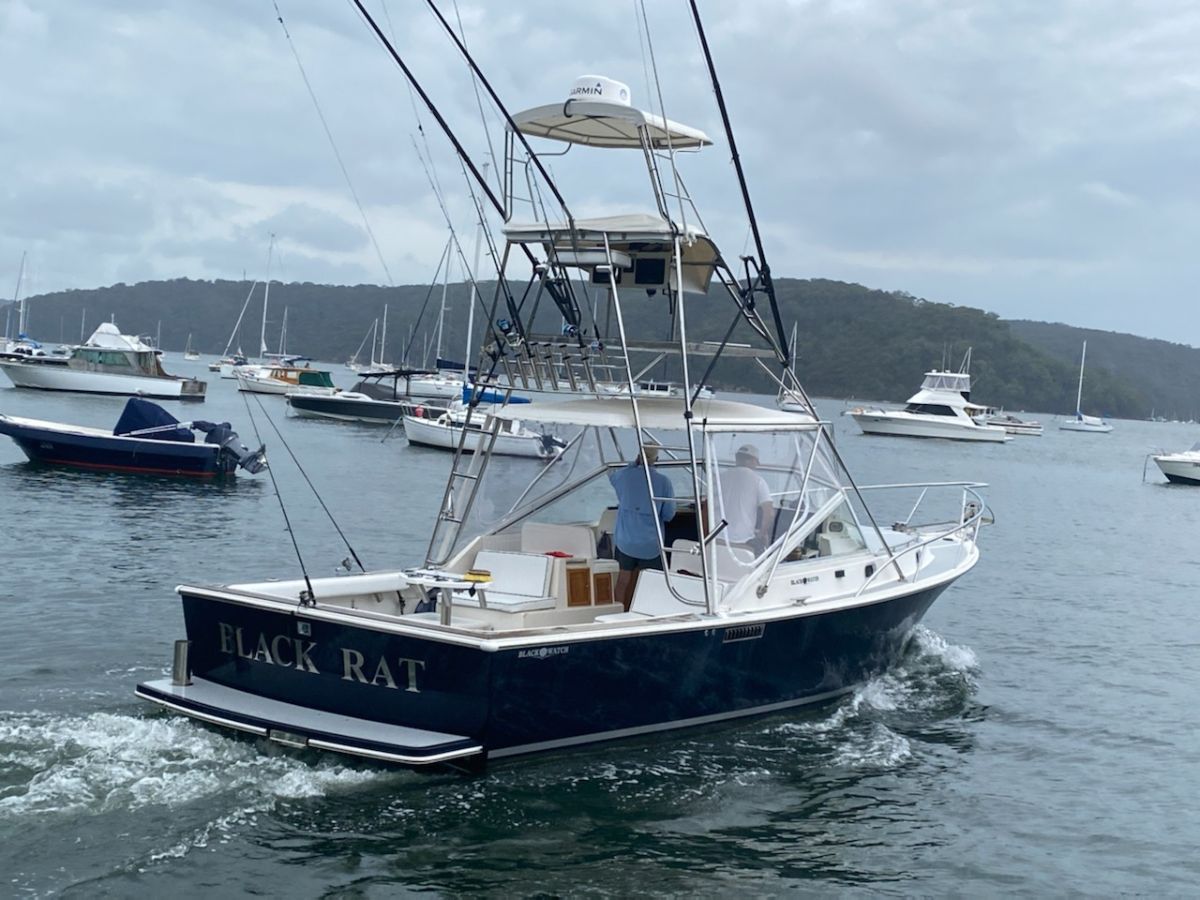
On a January 2022 trip aboard James' Black Rat, Andrew Hestelow fished from Broken Bay toward Texas Reef and compared the deeper, compact structure there with previous sessions at The Peak. The day showed why successful offshore jigging begins with the sounder and the drift rather than a predetermined lure weight.
The Quick Answer: Find the Fish Before You Start Jigging
Reef structure is a starting point, not a guarantee. Kingfish move, bait moves and yesterday's productive pinnacle can be empty today. Use the sounder to find bait and larger marks, note the depth they are holding, and position the boat so your jig passes through that zone.
Once you have found fish, the key decisions are:
- Where are the fish in the water column? Do not automatically fish the bottom.
- How quickly are you drifting across them? A small pinnacle can give you only a short productive window.
- Can your jig reach the marks while you are still over them? If not, go heavier, improve the drift or reduce unnecessary line drag where appropriate.
- Can you work the outfit effectively for repeated drops? Heavy tackle has a place, but unnecessary weight becomes tiring quickly.
If you are completely new to the technique, start with our beginner's guide to jigging for kingfish. This page goes one step more specific: how those fundamentals play out on Sydney's offshore reef structure.
A 90 Metre Pinnacle That Looked Good but Was Empty
On the 2022 trip, the first stop was a bump in about 90 metres that James had marked on an earlier run. On the sounder the structure looked promising. The crew worked it for about 20 minutes without a strike, then moved on.
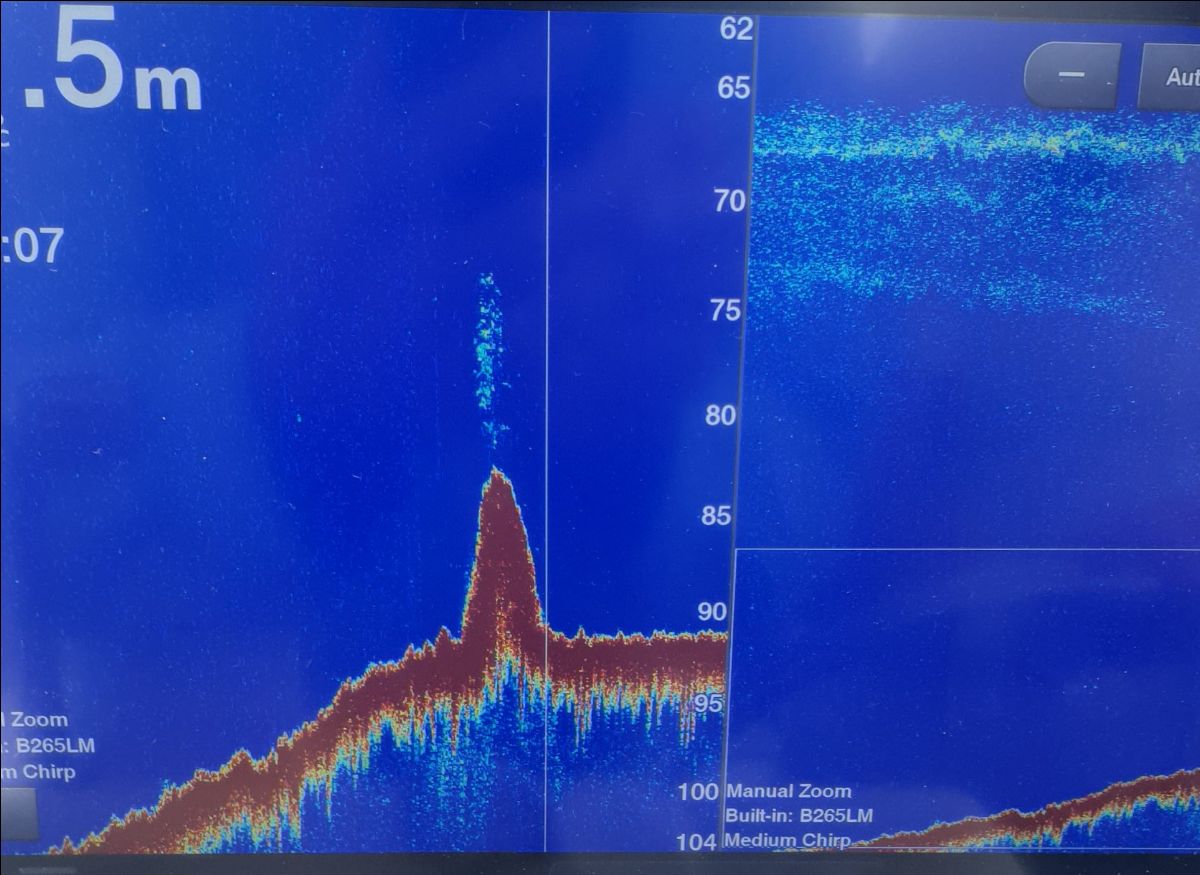
It is easy to fall in love with a mark because the reef shape looks perfect. But if repeated passes show no useful bait or predator activity and the jigs produce nothing, moving can be more productive than endlessly working empty water.
Practical rule: fish the life, not just the contour lines. Good structure tells you where to look. The sounder and the fish tell you where to spend your drops.
Texas Reef: Small Pinnacles Change the Jigging Problem
Texas Reef is not one feature that can be treated as a single mark. The fishing on this trip involved moving from bump to bump and looking for a quality show before dropping. When the kingfish are holding tightly around compact structure, boat position and sink rate become critical.
Texas Reef reference coordinates
Degrees and decimal minutes: 33° 24.260′ S, 151° 46.090′ E
Decimal degrees: -33.404333, 151.768167
The reference position above is published by Marine Rescue Lake Macquarie. Texas Reef covers multiple reef areas and pinnacles rather than one pin-sized spot, so use the coordinate to reach the general grounds and then search the surrounding structure, bait and fish with your chartplotter and sounder.
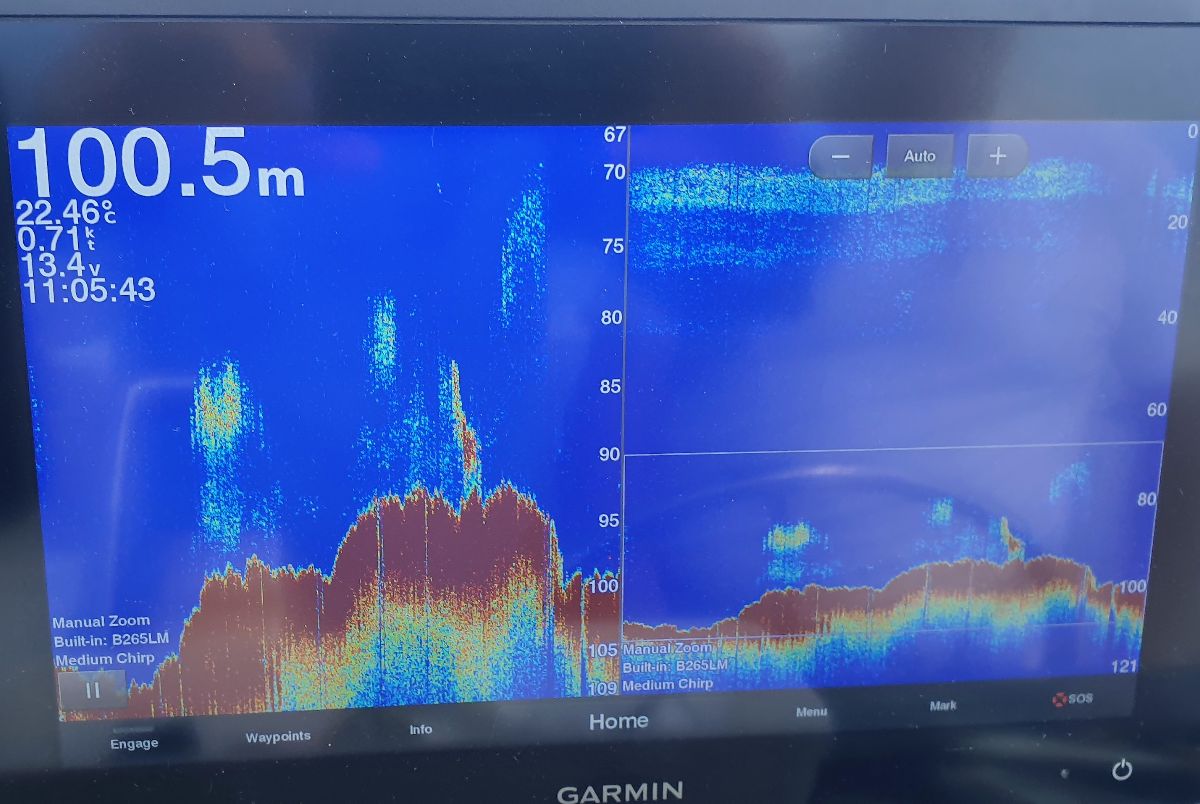
Andrew's point was simple: if the fish are sitting on a little pinnacle and your jig does not reach the correct depth until the boat is already well past it, the drop has missed its best opportunity.
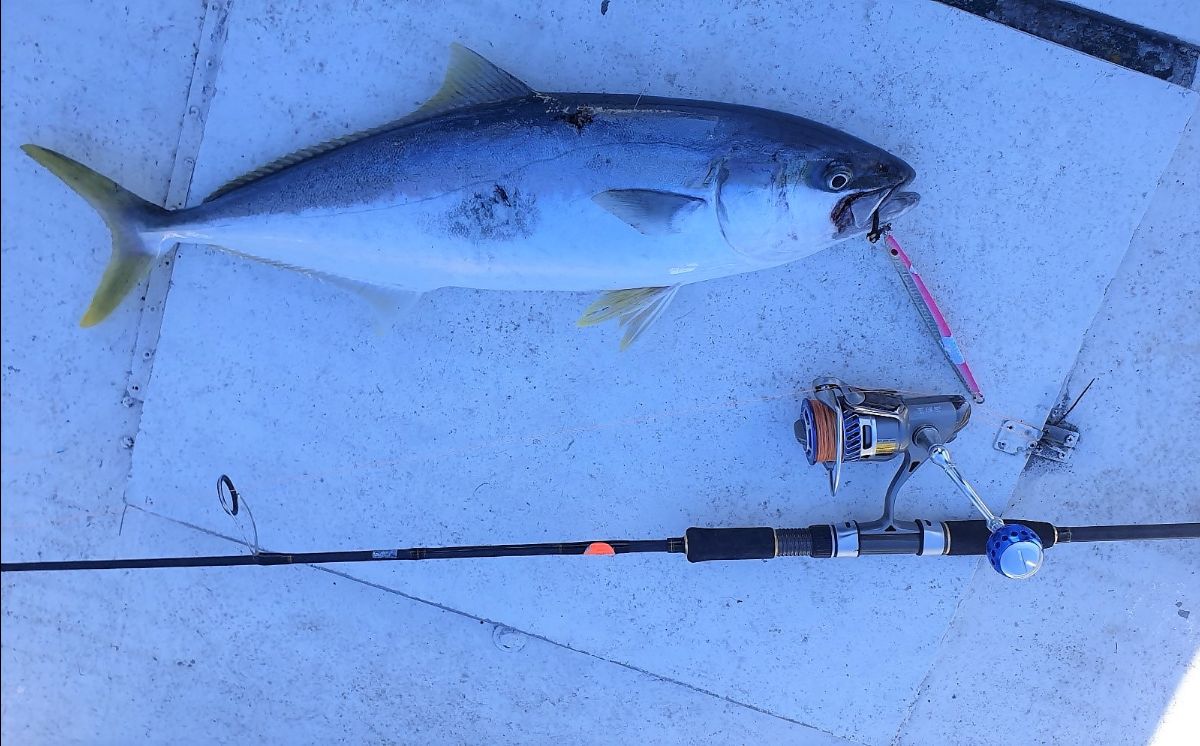
That is why the crew chose 250 g knife jigs at Texas on this trip. A slim, fast-sinking profile and enough weight for the conditions helped make the short drift window useful.
100 g vs 250 g for Sydney Kingfish
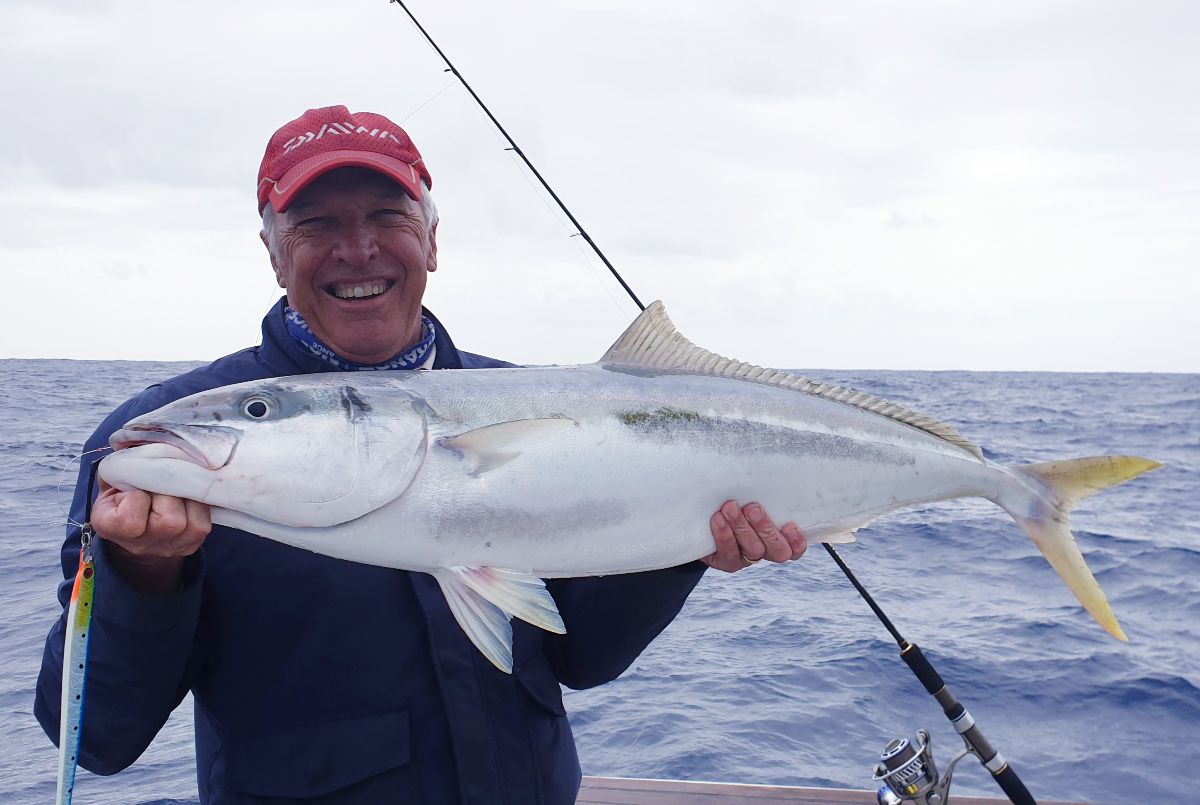
There is no single "Sydney kingfish weight". Andrew favoured 250 g at Texas when getting down quickly to compact, deeper marks mattered, but used 100 g at the shallower Peak when the conditions allowed it.
| Situation | Useful starting point | What decides it |
|---|---|---|
| Moderate depth and manageable current | 100 g knife jig | Use it if it reaches the marks cleanly and stays under useful control |
| Deeper water, faster drift or compact deep structure | 150 to 250 g+ | Extra weight can shorten the descent and keep more drops in the strike zone |
| Strong current or a large line angle | 250 g or heavier where required | Depth alone is not enough. Current, boat drift, braid diameter and jig shape all matter |
These are not fixed depth rules. On another Texas Reef trip in 2020, Andrew found the opposite result: a 100 g jig on much thinner braid reached the fish more effectively than his usual 250 g outfit because the heavier line was being pushed off-angle by the current. That real-world comparison is explained in our complete jig-weight selection guide.
The better principle is to use the lightest jig that still reaches the fish efficiently and gives you useful control. If a 100 g jig is being swept away, move heavier. If a 250 g jig is unnecessary and exhausting to work, lighten up.
The Peak: When 100 g Can Be Enough
The Peak provides a useful contrast with the deeper Texas example. Andrew has successfully fished it with 100 g jigs when current and drift allowed the lighter lure to reach the kingfish cleanly.
The Peak reference coordinates
Degrees and decimal minutes: 33° 58.760′ S, 151° 21.760′ E
Decimal degrees: -33.979333, 151.362667
The reference position above is listed in an NSW Government study of established Sydney fishing locations. The Peak is a collection of offshore bumps and pinnacles, so use the mark to reach the general ground and then find the active bait, fish and productive depth with your chartplotter and sounder. For another session at The Peak, including the day blue 200 g jigs became the standout lure, read Gemfish & Kingfish off Sydney: Browns Mountain and The Peak.
The important part is not memorising "Texas equals 250 g" and "The Peak equals 100 g". Current and drift can change the answer on the next trip. The locations simply demonstrate how the depth of the target, the size of the productive zone and the day's conditions combine to determine the most useful weight.
Read the Sounder in Three Steps
You do not need to turn every sounder mark into a species identification contest. For jigging, three questions are immediately useful:
1. Is there life around the structure?
Look for bait and larger marks rather than fishing every bump just because it exists. A reef without active life may deserve a quick test, but not endless drops.
2. What depth are the fish holding?
If the marks are suspended, fish that band. Dropping all the way to the bottom and jigging the entire water column wastes energy and time outside the productive zone.
3. How wide is the productive zone?
A broad school gives you more margin for error. Fish packed onto a small pinnacle demand better boat positioning and quicker delivery. Plan the start of the drift so the jig arrives at the marked depth as you pass over the fish, not after you have already left them behind.
Keep the Tackle Balanced Enough to Jig All Day
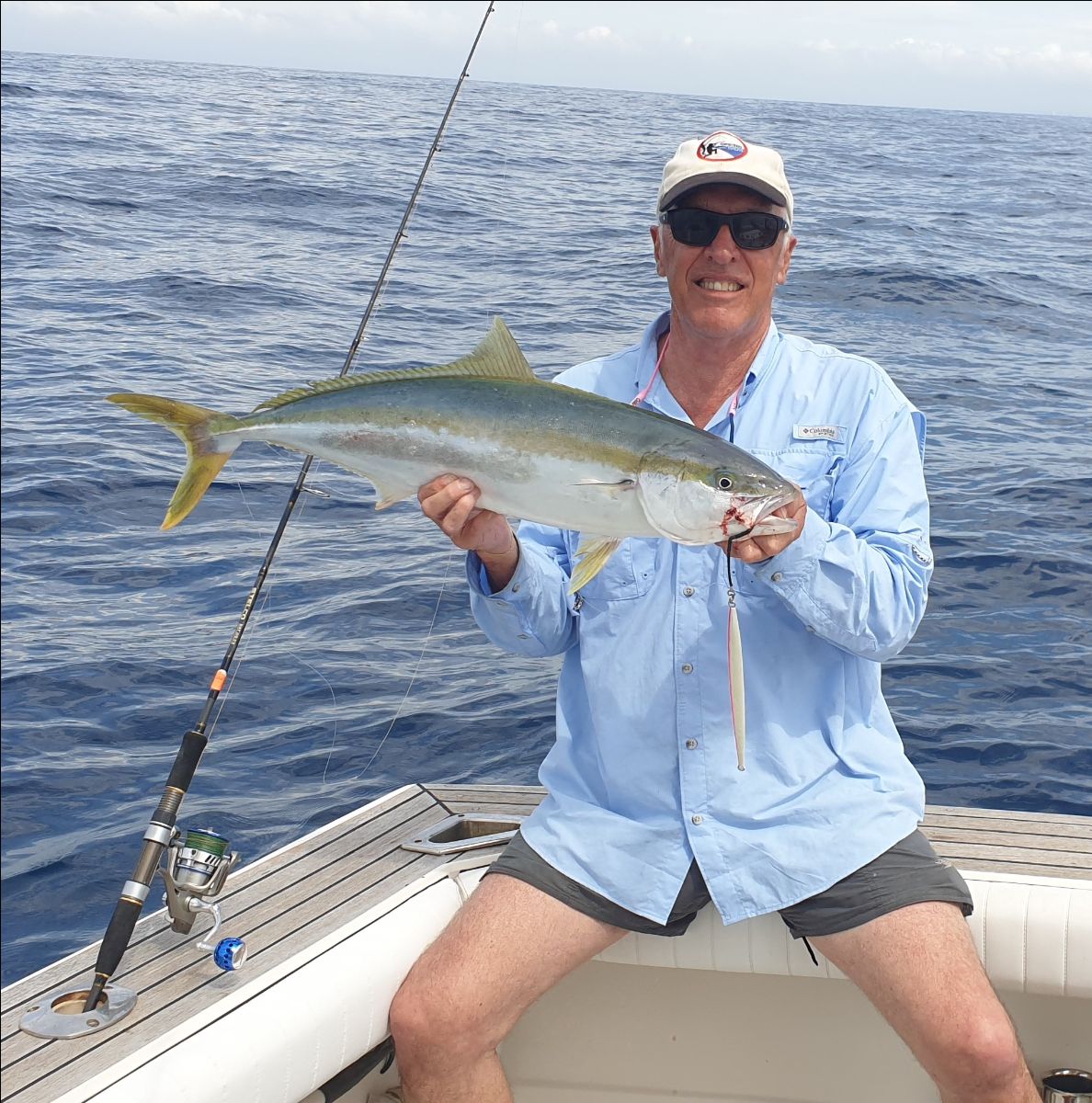
On this trip Andrew used a comparatively light 15 kg jigging outfit with a 4000-size spinning reel. It suited the fishing he encountered that day, but the right line class and reel size still depend on the fish, depth and structure being targeted.
The principle remains useful: match the rod to the jig weight, the reel and line to the fish and structure, and the whole outfit to what you can work repeatedly. A setup that is needlessly heavy can make mechanical jigging exhausting. A setup that is too light for the fish or structure creates a different problem.
When a kingfish hits, keep the pressure smooth and work within the capability of the tackle. How aggressively you can fight the fish depends heavily on the depth and the structure beneath you. Deep open water can give you more room than a fish hooked close to hard reef, wreckage or other snagging hazards.
A Good Sydney Jigging Session Is a Series of Decisions
This was not a fairy-tale first-drop fishing session. The crew checked promising structure that produced nothing, moved to another area, used the sounder to find better marks, chose a jig weight to suit a small target and kept fishing until they found fish.
A simple offshore workflow looks like this:
- Choose known reef, wreck or pinnacle areas appropriate for the conditions and your boat.
- Use the sounder to look for bait and predator marks before committing to repeated drops.
- Note the fish depth, not just the bottom depth.
- Work out the direction and speed of the drift.
- Choose a jig heavy enough to reach the fish while the boat is still in a useful position.
- Drop slightly up-drift of compact marks so the lure arrives in the zone at the right time.
- Work the jig through the marked depth band, then repeat the productive part of the drift.
- If the sounder and fishing stay quiet, move rather than treating one piece of structure as compulsory.
The Same Day, Different Sydney Grounds
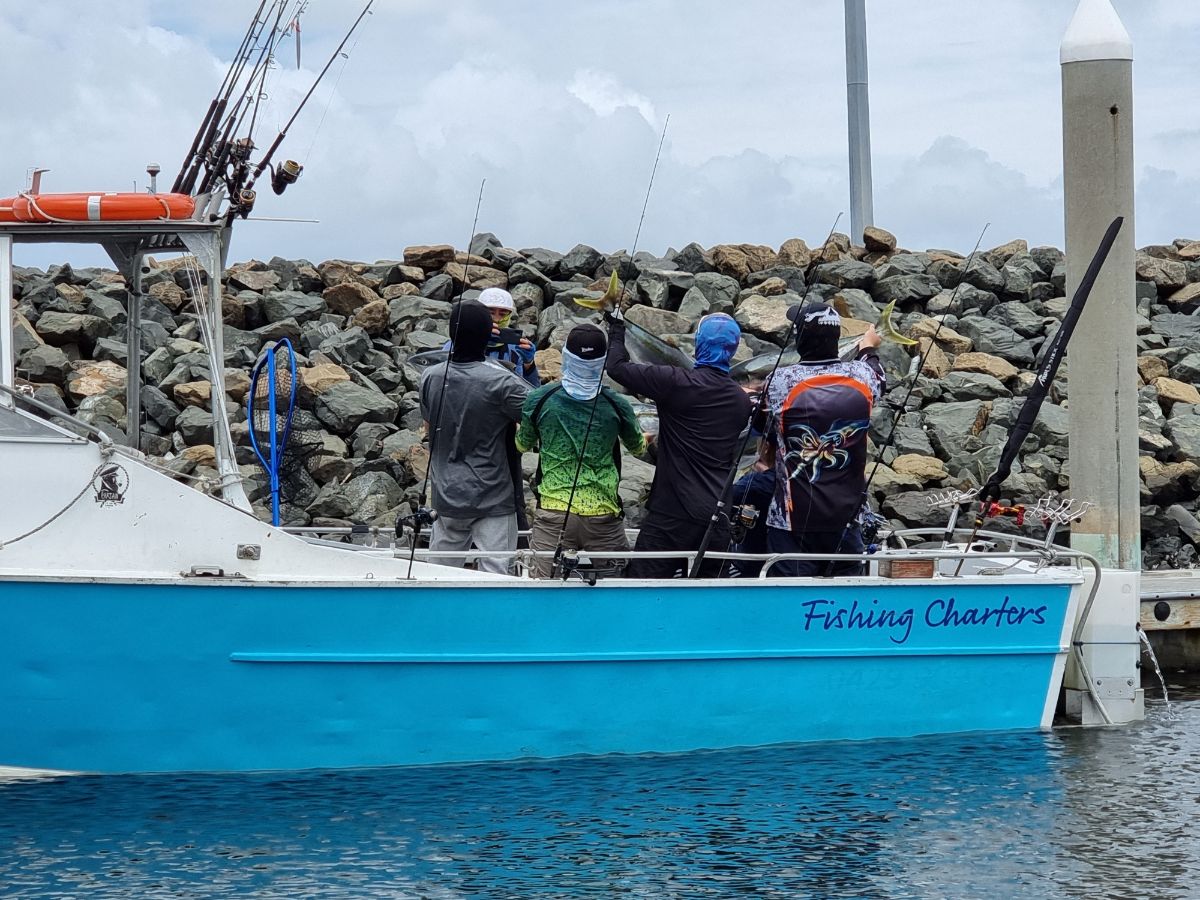
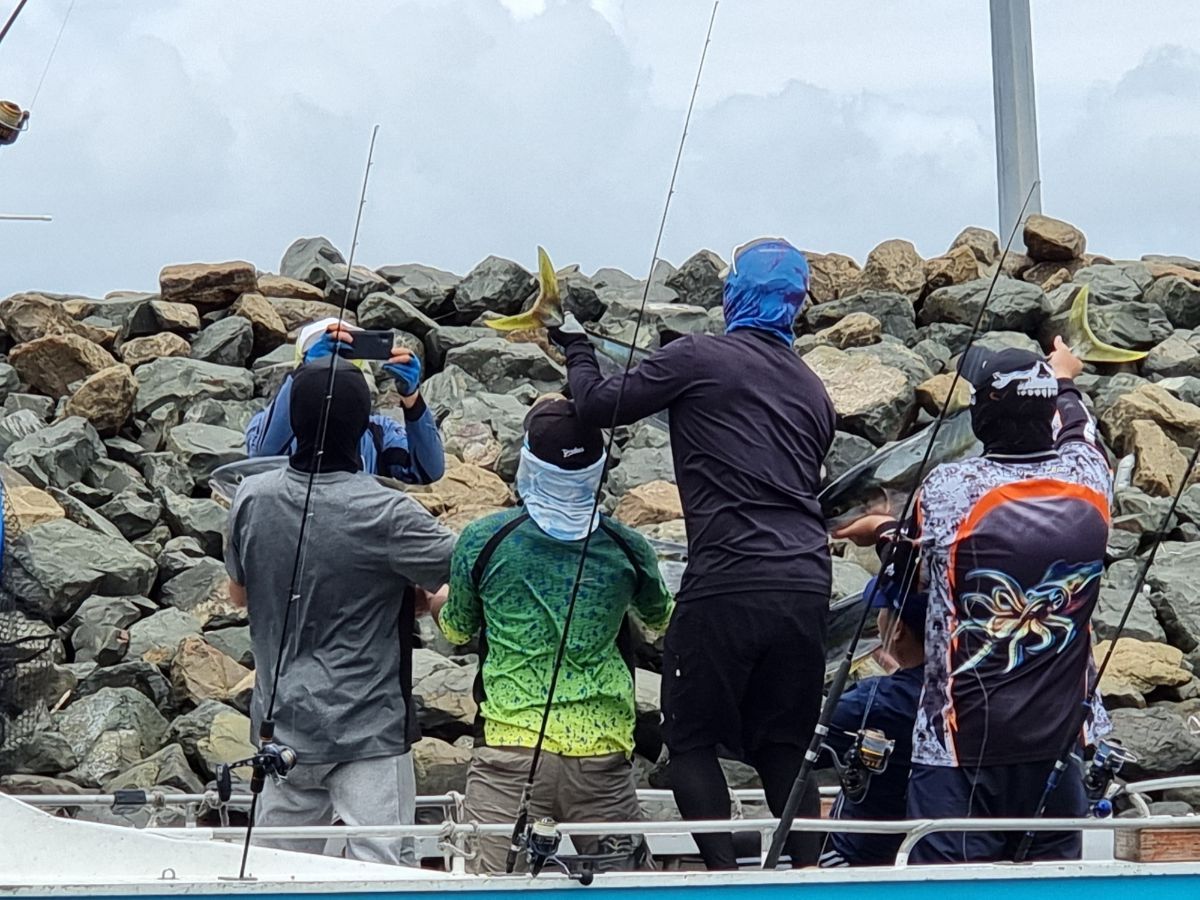
Back at the marina, Greg Stevenson sent Andrew photos of another solid Sydney kingfish result from the same day, taken at the Botany Bay boat ramp. The catch reinforced the broader point: Sydney's kingfish fishery extends across multiple offshore grounds, and jigs are a proven way to target fish holding around that structure.
The Same Decisions on a 2026 Sydney Trip
The basic decisions remained the same several years later: find the fish, understand the drift and get a suitable jig into the strike zone efficiently. The exact tackle may change, but those on-water decisions continue to determine whether the jig spends useful time around the fish.
Our August 2026 Sydney kingfish report follows the same logic on much deeper offshore reef structure. The crew used live bait as well as 150 g and 250 g jigs, with jig-caught kingfish and amberjack among the results. It shows the same principles being applied again several years after the Jigs Brings Kings trip.
Frequently Asked Questions
What weight jig should I use for kingfish off Sydney?
There is no single correct weight. A 100 g jig can work very well on moderate-depth reefs when current and drift are manageable, while 150 g, 250 g or heavier jigs become useful when depth, current or a short drift window demands faster delivery. Use line angle and the jig's ability to reach the marked fish as your on-water test.
Are 100 g jigs heavy enough for The Peak?
They can be. Andrew has successfully jigged The Peak with 100 g jigs, but current and drift decide whether that weight is practical on any particular day. Carry alternatives rather than treating one weight as mandatory.
Where is The Peak off Sydney?
A useful public reference position for The Peak is 33° 58.760′ S, 151° 21.760′ E, or -33.979333, 151.362667 in decimal degrees. The coordinate reaches the general ground; use your chartplotter and sounder to locate the particular pinnacle, bait school and depth band holding fish.
Where is Texas Reef off the NSW Central Coast?
A useful published reference position for Texas Reef is 33° 24.260′ S, 151° 46.090′ E, or -33.404333, 151.768167 in decimal degrees. Texas Reef covers multiple reef areas and pinnacles, so treat this as a starting point and use a current marine chart, chartplotter and sounder to locate the structure and fish.
Why use a 250 g jig at Texas Reef?
On the 2022 trip, kingfish were holding around small pinnacles and the productive drift window was short. The heavier jig helped get the lure down quickly before the boat moved beyond the marks. On other days, lighter jigs can work at Texas when the complete setup and conditions allow it.
Should I drop the jig all the way to the bottom?
Not automatically. If the sounder shows kingfish suspended above the reef, concentrate on that depth band. Fishing where the fish are saves energy, reduces time in unproductive water and can reduce unnecessary contact with the bottom.
What should I look for on the sounder?
Start with structure that can concentrate bait, then look for bait schools and larger predator marks around it. Note the depth and size of the active zone. That information tells you where to put the jig and how precisely you need to control the drift.
Build Your Jigging Setup Around the Water You Actually Fish
Sydney's offshore reefs can reward both light and heavy knife-jig setups. The mistake is deciding the jig weight before you have looked at the water, the drift and the sounder.
Find the fish first. Put the boat in a position that gives your lure time to reach them. Then use enough jig to stay in control without carrying unnecessary weight. That approach is more useful than any fixed grams-per-metre formula.
Where to Go Next
Ready to fish? Browse our knife jig range, including the current 100 g knife jig 10-pack and our 250 g knife jigs.
Need help choosing weight? Read What Weight Jig Should I Use? for the detailed 100 g vs 250 g Texas Reef experiment.
Want to improve your retrieve? See Mechanical Jigging for Kingfish for rhythm, depth control and the Twelve Mile Reef case study.
New to jigging? Start with How to Get Started with Jigging for Kingfish in Australia.
Andrew Hestelow first published this field report in January 2022. The photographs show the tackle used during that trip.
Also in Tackle News


Target: Kingfish
Two Sydney offshore sessions targeting kingfish with live yellowtail and heavy knife jigs, including fish to one metre, sharks and an amberjack.


Mackerel, Kingfish and Sharks
TUESDAY! Wanted to downrig small live bonito around Long Reef for a stud kingfish. Our purple trolling lures accepted the challenge:


