How to Use a Fishing Line Counter: Deep Dropping, Jigging & Spooling
Originally published 18 December 2025. Updated August 2026 with expanded setup instructions and additional practical detail.
A clip-on fishing line counter is one of those simple pieces of tackle that turns out to have far more uses than you expect. We originally supplied them with our downriggers, but over the years we have also used them for deep dropping, jigging, checking electric-reel readouts and measuring exactly how much line is going onto a reel.
That last job is what first made me appreciate them. Reel boxes often quote nice round capacities such as 300 metres of one line class or 800 metres of another. In the real world, braid diameter, backing, spooling tension and how full you pack the spool can all change the result. Clip a counter to the rod and you can measure the line that actually passes onto your reel.
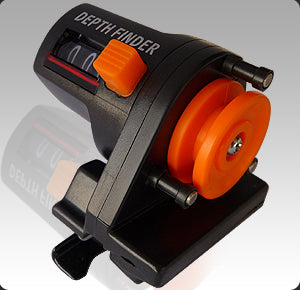
What Does a Fishing Line Counter Actually Measure?
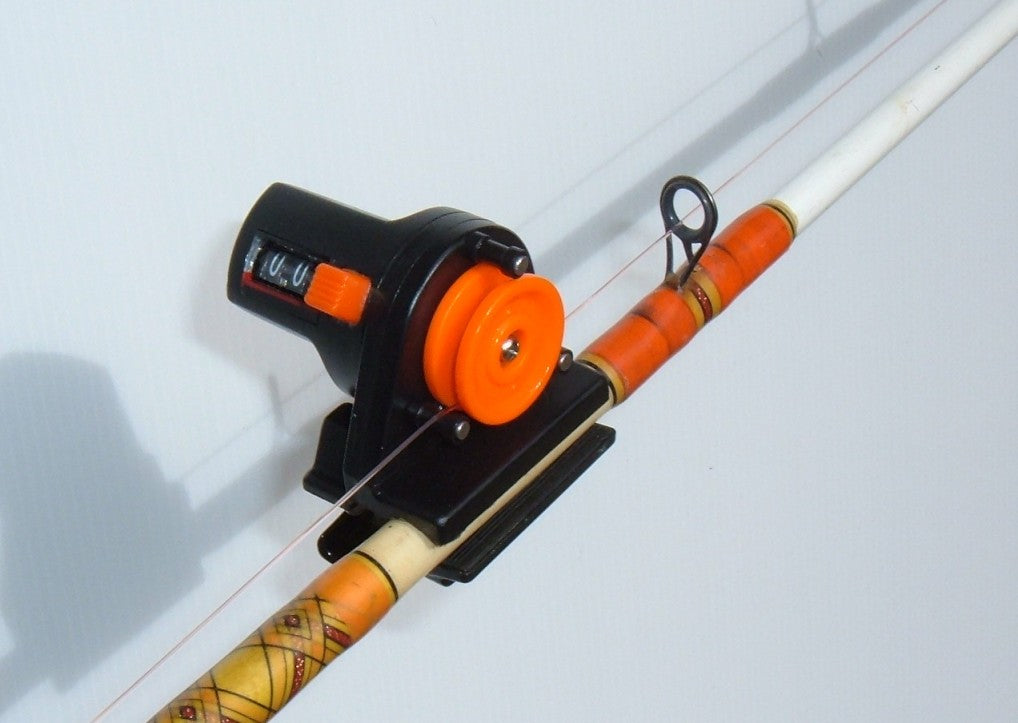
This type of counter clips to the rod and measures the line that passes over its measuring wheel. Our counter records in one-metre steps on a large three-digit mechanical display and resets to 000 with a push button.
The important distinction is that it measures line out. That is not always identical to the vertical depth of your bait, sinker or jig. In current or while the boat is moving, the line can angle away from the boat, so 100 m of line out does not necessarily mean your tackle is 100 m directly below you.
That is why a line counter and a sounder work so well together. The sounder tells you where the bottom, structure or fish are. The counter gives you a repeatable reference for how much line you have deployed.
How to Set Up a Clip-On Line Counter
- Choose a good position on the rod. Clip the counter where the line can pass cleanly through it. Under load, avoid a position that pulls the line hard across one side of the counter.
- Wrap the line once around the orange measuring wheel. Our original instructions run the line clockwise around the wheel.
- Reset the display to 000. Press the orange reset button before you start measuring.
- Let line pass through normally. As the line moves, the measuring wheel turns and the counter records the distance in metres.
- Use the reading as a repeatable reference. Reset to 000 whenever you begin a new drop or a new spooling measurement.
1. Measuring Line While Spooling a Reel
For me, this is one of the most useful jobs for a detachable line counter. Put the reel on a rod, clip on the counter, reset it to 000 and measure the line as it goes onto the reel.
It answers a question that a line-capacity chart cannot answer perfectly: how much of this actual line, under this spooling tension, did I put on this reel?
That is particularly handy if you are splitting a bulk spool between several reels, using backing, topping up braid, or simply want to know what the reel actually holds. A counter does not turn reel spooling into a laboratory measurement, but it gives you a very useful practical number.
2. Using a Line Counter on a Downrigger
We started out supplying these counters with our downriggers and still use them for controlled-depth fishing. A detachable counter can clip to a suitable downrigger boom and give you a simple indication of the amount of line deployed.
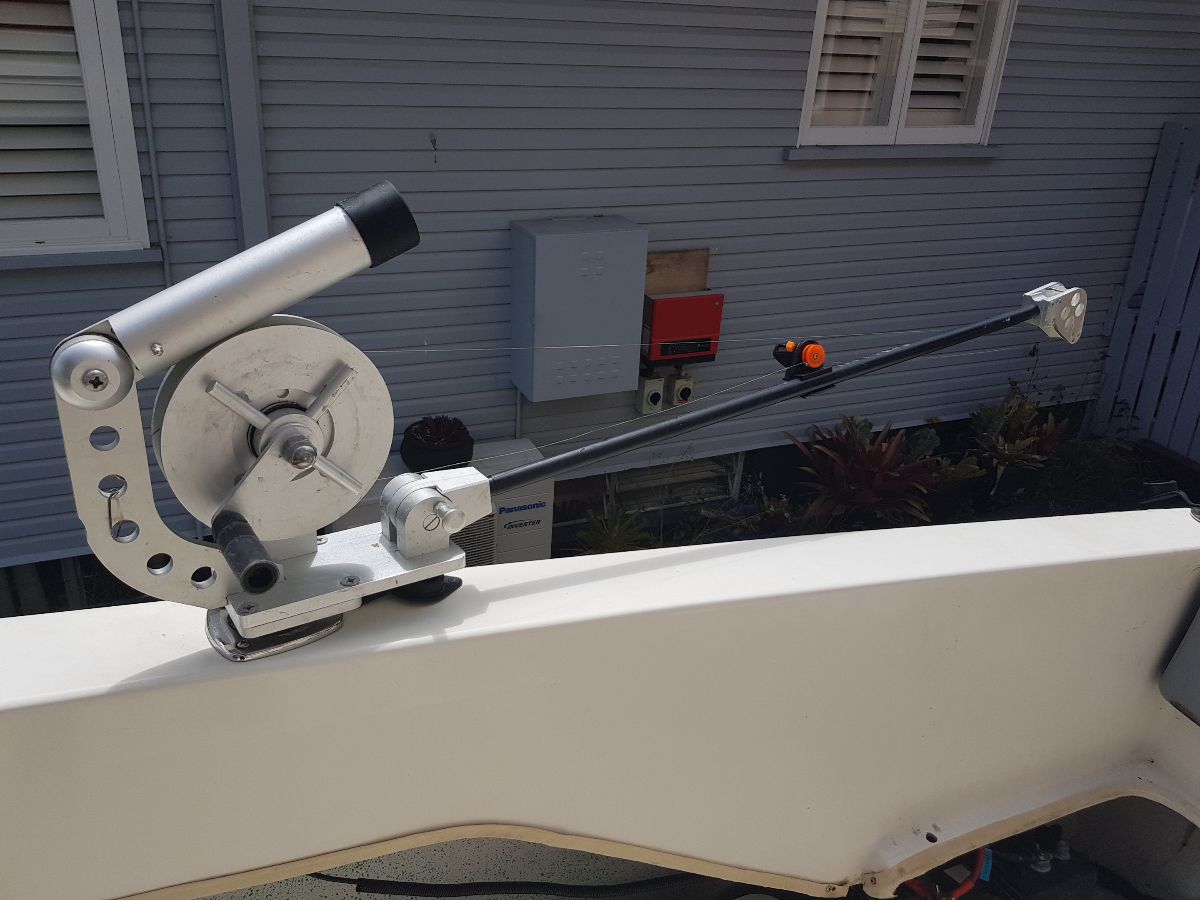
The detachable design also made them useful to anglers with their own home-built downriggers. You are not locked into a reel with an integrated counter. If the boom and line path are suitable, the counter can be added where it is needed.
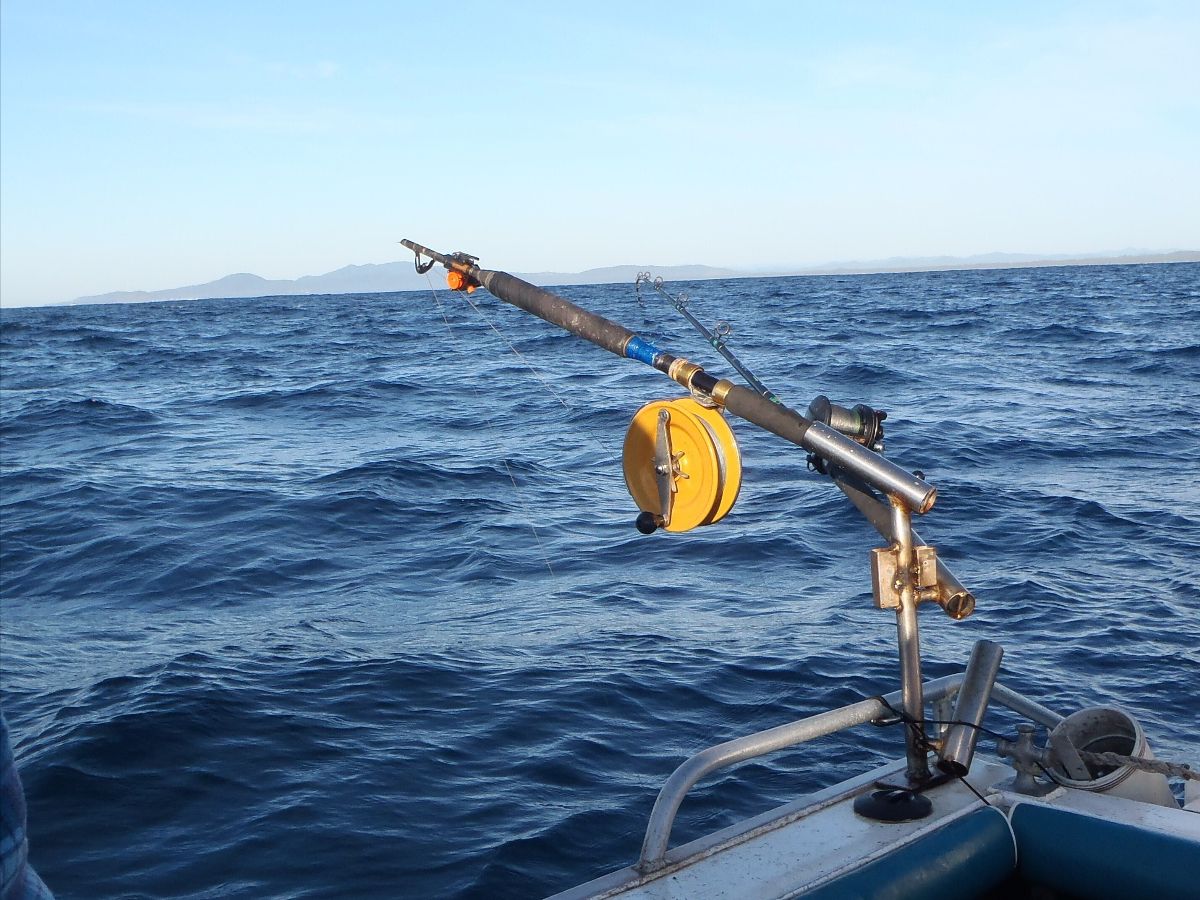
If you are new to controlled-depth trolling, our How to Start Downrigging guide covers the broader setup, including bait placement, release systems and using your sounder to choose a fishing depth.
3. Deep Dropping in More Than 400 Metres
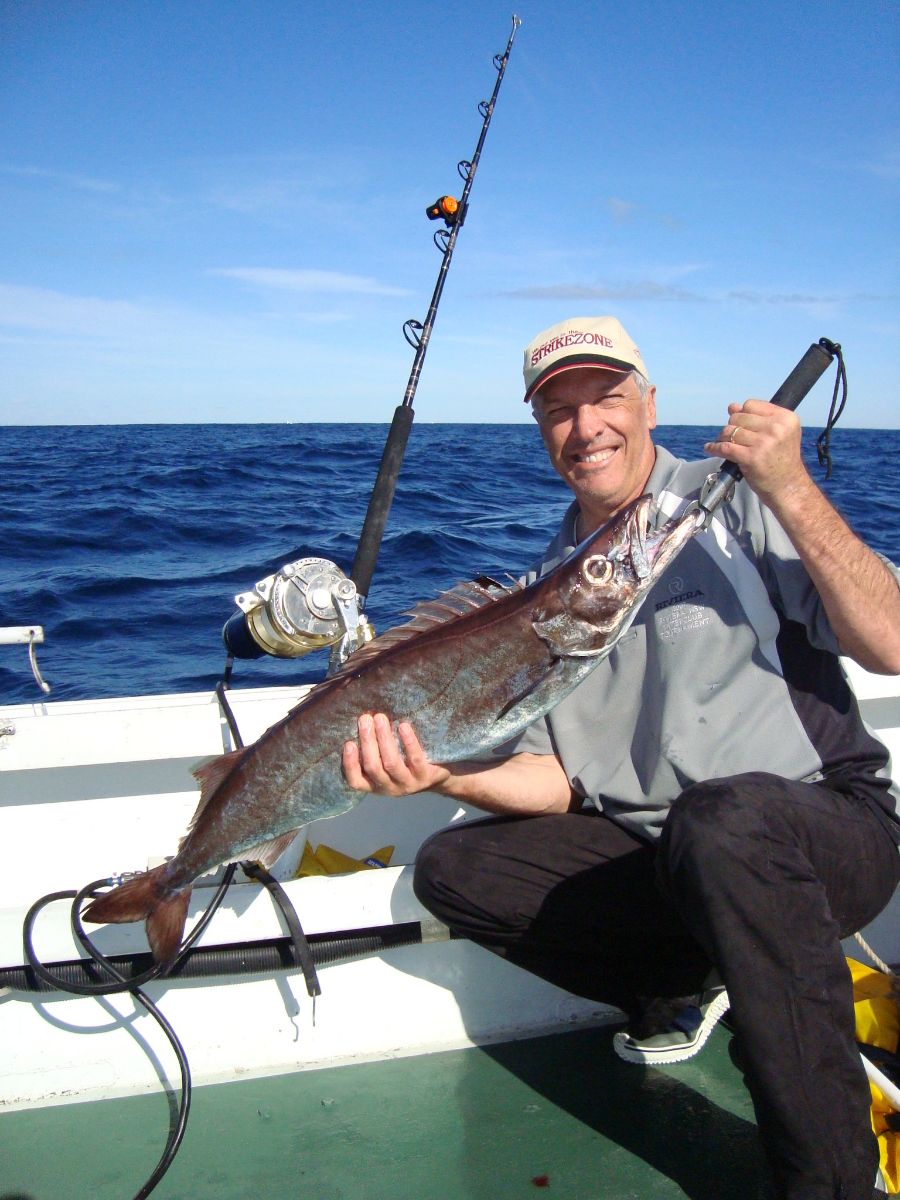
The little counter earned its keep when we were fishing Browns Mountain off Sydney in more than 400 m of water. One of our large electric setups carried 1000 m of heavy braid, and we routinely used the detachable counter at depths around the 400 m mark.
A reading such as 415 m was no problem. That is a useful real-world test because at those depths you are well beyond what most anglers ever need from a clip-on counter.
Is It a 999 m or 1000 m Fishing Line Counter?
Both descriptions can appear when people talk about this class of counter, so it is worth being precise.
The mechanical display has three digits and reads from 000 to 999 m, in one-metre increments. That makes 999 m the largest number the display can show at one time. In practical terms it is commonly searched for or described as a 1000 m line counter because it covers essentially that depth class.
For our own specifications, we state the actual 000 to 999 m display and also use the phrase "1000 m line counter" where it helps anglers find the product they are looking for. That keeps the description useful without pretending the display has a fourth digit.
4. A Backup or Cross-Check for an Electric Reel
Electric reels usually have their own digital depth or line-out display, but a separate mechanical counter can still be useful. We have had occasions where the electric-reel display was playing up, so we simply clipped the detachable counter onto the rod and kept fishing.
We have also seen differences between a reel's electronic readout and a separate line counter. That does not automatically mean one device is "wrong". They may be measuring in different places and under different conditions. For fishing over rough ground, the important thing is to choose a reference you understand and use it consistently alongside your sounder.
5. Jigging to Fish You Can See on the Sounder
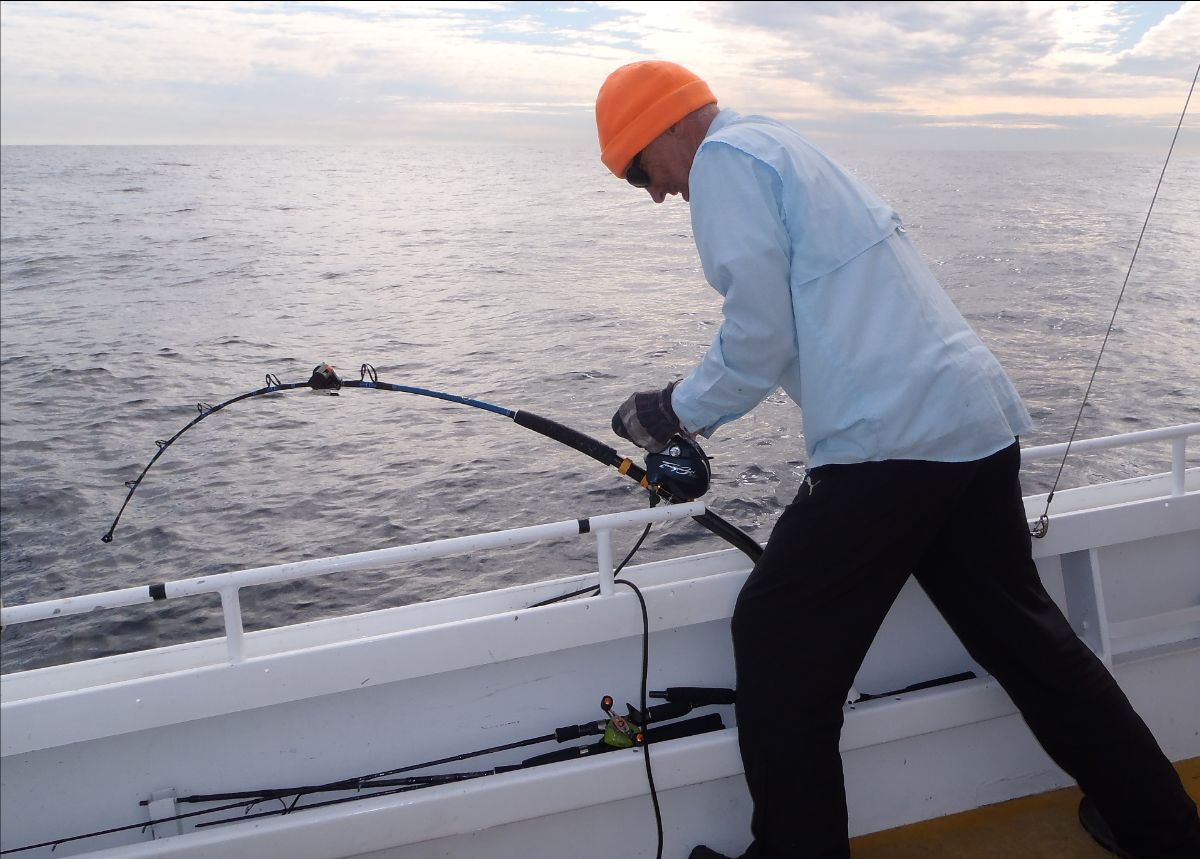
A line counter can also be very handy while jigging. If you mark fish or structure at a known depth, you can compare that depth with the amount of line you have let out and stop the jig before simply dropping all the way to the bottom.
We used exactly that idea around the Birchgrove Park wreck off Sydney in roughly 80 m. With structure standing above the wreck, being able to stop a jig short of the bottom helped reduce the chance of donating tackle to the wreck.
When the current is running hard, remember that line out and actual vertical depth can diverge. If the line is angled away from the boat, a 100 m counter reading does not guarantee the lure is sitting 100 m straight down.
When a Detachable Counter Makes More Sense Than a Line-Counter Reel
A purpose-built line-counter reel is a good solution when you want the counter permanently integrated into the reel. A clip-on unit makes more sense when you only need the measurement some of the time, want to use an existing spinning or overhead reel, need to move the counter between outfits, or want a simple tool for spooling several reels.
That flexibility is really the appeal. It is not a complicated gadget and it does not need to replace your sounder or electric-reel display. It simply gives you another useful measurement when you need one.
Fishing Line Counter FAQs
Can I use a fishing line counter on a spinning reel?
Yes. This style clips to the rod rather than being built into the reel, so it can be used with a suitable spinning setup. Choose a mounting position where the line runs cleanly through the counter.
How do I measure the line when spooling a reel?
Fit the reel to a rod, clip the counter in a clean line path, wrap the line once around the measuring wheel, reset to 000 and then spool the reel while the line passes through the counter. The final reading gives you a practical measure of the line that has passed onto the reel.
Does a line-counter reading equal fishing depth?
Not necessarily. The counter measures line out. Current, drift, line angle and the weight of your terminal tackle can all affect actual vertical depth. Use your sounder to understand the water column and the counter to make your deployment repeatable.
Will it work for deep dropping?
Yes. We have used this style of counter in more than 400 m of water at Browns Mountain, including readings around 415 m.
What is the maximum display?
The three-digit display reads from 000 to 999 m in one-metre increments. It is reasonable to think of it as a 1000 m-class line counter, while 999 m is the largest number actually shown on the display.
A Simple Tool With a Lot of Uses
We started supplying these as a downrigger accessory, but that ended up being only one of their uses. Measuring line while spooling, fishing 400 m plus, checking an electric-reel readout and jigging to sounder marks have all earned them a place in our tackle over the years.
If you want to add a line counter to tackle you already own, our detachable model is available as a single counter or two-pack with delivery included in Australia.
View the Detachable Fishing Line Counter
Also in Tackle News


Target: Kingfish
Two Sydney offshore sessions targeting kingfish with live yellowtail and heavy knife jigs, including fish to one metre, sharks and an amberjack.


Mackerel, Kingfish and Sharks
TUESDAY! Wanted to downrig small live bonito around Long Reef for a stud kingfish. Our purple trolling lures accepted the challenge:


