How to Use Downrigger Release Clips
What the release clip does
A downrigger release clip holds the fishing line while the weight takes the bait or lure to depth. When a fish strikes, or when the angler pulls firmly enough, the line should release so the rod and reel can fight the fish without the downrigger weight attached.
The clip must hold consistently through deployment, boat movement, blowback and normal bait action, then let go at a sensible load. Too light and it false-releases. Too heavy and the rod loads excessively or a small fish remains attached without being obvious.
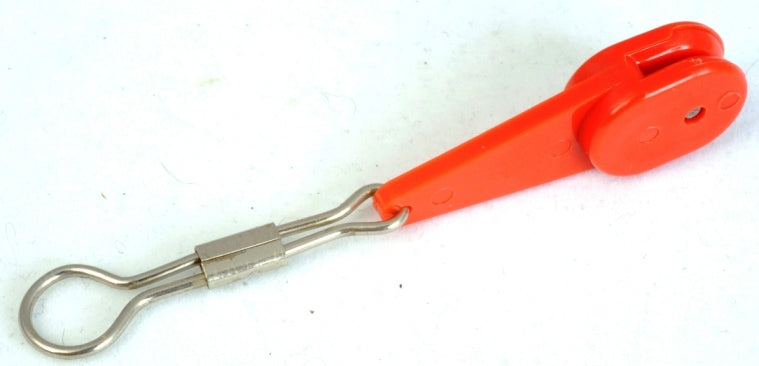
The adjustable Downrigger Shop release clip is fitted between the downrigger cable thimble and the weight. Follow the instructions supplied with the exact clip for mounting and adjustment.

Mount it in the intended position
Inspect the downrigger terminal connection before adding a release. The clip, swivel, thimble and weight attachment must be sound and compatible. For the current Du-Bro style, the release mounts between the thimble and weight. Do not attach it to an improvised rope, sharp edge or point where it can foul the propeller or the downrigger line.
Keep the release clear of the weight’s sharp or damaged surfaces. Confirm that all clips and split rings close properly. If the product has been modified, bent or assembled with unidentified parts, replace it or compare it with current manufacturer instructions before use.

Load the fishing line consistently
Set the rod in a secure holder and put the reel in a controlled free-spool or low-drag state appropriate for deployment. Keep fingers away from the clip jaws and never wrap line around a hand.
Place the line in the clip at the same jaw position each time. A line loaded near the hinge may hold differently from one at the tip. Use a clean section of line and avoid trapping a knot, damaged leader or swivel in the jaws.
With mono, the jaw grips the line directly. Braid is thinner and can slip or suffer concentrated pressure, so it may behave better through a rubber-band interface where the fishing situation and clip allow it. A lure that pulls hard also needs a different test from a quiet live bait. Do not assume the same setting works for both materials or both presentations.
After loading, pull the rod line gently to confirm it is seated. Lower the weight slowly for the first few metres while watching the rod. Sudden acceleration can create a false release or wrap the bait around the downrigger line.
Adjust by testing, not by copying a universal setting
There is no universal number of turns, jaw setting, line class or release force. Start from the manufacturer’s current instructions, then test with the actual line, bait or lure, rod load and trolling speed.
Make one small adjustment at a time and repeat the same loading position. A useful setting should:
- hold during controlled deployment
- hold through ordinary bait or lure action
- load the rod enough to show a clear release
- release with a deliberate strike or the expected fish load
- avoid damaging or flattening the line
Run the test beside the boat at low speed first. Do not send an untested setup to depth. If the clip adjustment cannot produce a repeatable result, inspect the jaws and line rather than continuing to tighten it.
A supported rubber-band method
For live bait around Sydney kingfish, I often prefer a size 18 rubber band because it can reduce direct jaw pressure on the fishing line and give the bait a different connection to the release. That is a specific preference, not a universal size recommendation.
The band is attached to the fishing line with a simple looped connection, then the band is placed in the release clip. The exact method must keep the line undamaged and the band secure during deployment. Test the release at low speed and retrieve every piece of band you can. Do not assume that discarded rubber will harmlessly disappear.
Band size, age and material change the result. Old bands can fail during deployment; heavy bands can hold too strongly. Store them away from heat and sunlight and replace any that are cracked or tacky.
Fix false releases methodically
If the line releases before it reaches depth, retrieve and inspect the setup. Common causes include:
- line loaded at a different point in the jaws
- contaminated, worn or damaged jaw surfaces
- a bait that is spinning or pulling harder than expected
- lowering the weight too quickly
- boat speed or sea state increasing the load
- braid slipping where mono previously held
- adjustment that is too light for the complete setup
- a diving lure or large bait creating more drag than the setting can hold
Correct the cause one step at a time. Do not immediately clamp the clip much harder. A spinning bait, lure running outside its designed speed or tangled leader needs to be fixed, not hidden behind more jaw pressure. If the line is polished, flattened or nicked where the clip grips it, cut out the damaged section and change the connection method before fishing again.
Fix failure to release before fishing deeper
If the line will not release during a deliberate test, reduce the setting as the manufacturer directs and check that the line is in the proper jaw position. Inspect for grooves, corrosion or a seized adjustment. Confirm that a rubber-band connection is not doubled excessively or trapped around hardware. Then retest with the actual bait or lure, because a surface pull on an empty line does not reproduce the load at trolling speed.
Never pull against a heavily loaded rod while a person is near the tip, hook or weight. Retrieve the downrigger under control and test again at the surface. If the clip remains unpredictable, replace it.
Small fish can sometimes stay attached without producing an obvious release. Watch for a change in rod rhythm or bait behaviour. Periodic checks are part of responsible trolling.
Inspect after every trip
Rinse and maintain the clip according to its manufacturer’s instructions. Check jaw pads, springs, screws, rings and swivels. Replace cracked pads, distorted metal, corroded attachments or a clip that no longer repeats its setting.
The current release-clip pack provides the hardware, but reliable use comes from consistent line placement and a real test. Mount it correctly, start conservatively, change one variable at a time and retrieve the system whenever its behaviour is uncertain.