How to Upgrade Fishing Reel Drag Washers with Carbontex
A smooth, predictable drag can make the difference when a good fish makes a long, hard run. If the felt or fibre drag washers in your fishing reel are worn, glazed or inconsistent, replacing them with correctly sized carbon-fibre drag washers can restore smooth drag performance and give an older reel a new lease on life.
This guide shows how we cut and install replacement Carbontex drag washers from sheet material using a typical spinning reel as the example. Start with the sticky-drag diagnosis and basic checks before dismantling the reel or deciding it needs replacement washers.
Originally published June 2018 from our own reel servicing and fishing experience. Updated August 2026 with clearer installation, sizing, material-quality and drag-grease guidance.
Why we started upgrading our reel drag washers
In 2018 I was fortunate enough to chase tuna and mackerel on the NSW north coast. All went well:
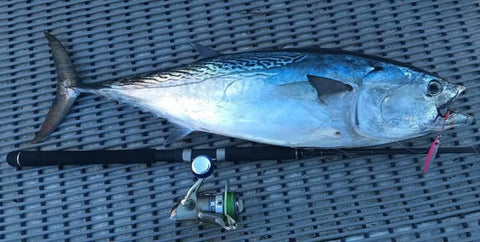
Some mighty battles occurred because I was using our light 702 combo to maximise casting distance with 40 gram metals. The 4000-size Ryobi reel was warm to the touch when these speedsters hit the afterburners:
Before heading off I asked Tim to service all the reels I was taking and, where needed, replace the felt and synthetic-fibre drag washers with carbon-fibre washers. That proved to be a very good call.
Around the same time, a customer upgrading the drag in his Stradic Ci4+ sent us a photo of the original washers he removed:
“Thanks Andrew. Check out the cheap drag washers they put in the Stradic Ci4+.”

Facebook reader David M remembered seeing the same sort of problem years earlier:
“Wow, that’s very ordinary for that price bracket. Reminds me of the oiled leather in Daiwa Millionaires 30 years ago, smooth but only lasted a week on the striped tuna.”
Rather than buying individual pre-cut washers for every reel, we use sheet material and cut replacements to match the original washers. A single sheet can service several reels depending on the diameter and number of washers required.
How to replace fishing reel drag washers with Carbontex
The exact drag-stack design varies between reels, so take your time and keep every metal and fibre washer in its original order and orientation. If your reel manufacturer specifies a particular service procedure, follow that procedure. The older Carbontex photo walkthrough shows the sequence on another spinning reel; use the sizing guidance here and the service information for your exact model.
What you'll need
- Carbontex drag washer sheet in the correct thickness
- One of the original fibre washers to use as a template
- Vernier calipers or another accurate way to measure washer thickness
- A suitable drill bit or hollow punch for the centre hole
- Sharp scissors suitable for cutting the sheet
- Purpose-made fishing reel drag grease if your drag is to be run greased
- A clean work area where the drag-stack parts can be laid out in order
1. Remove the spool and expose the drag stack
Back the drag knob off and remove the spool. On a typical spinning reel, the drag stack sits inside the spool.

2. Carefully remove the retaining clip
Carefully remove the circlip or retaining spring that holds the drag stack in place. Keep a hand over it as you release it so it cannot spring away.

3. Lay the drag stack out in order
Remove each washer one at a time and lay the stack out in the exact order it came from the reel. You will usually see friction washers alternating with metal washers. Their sequence and orientation matter, so a quick photo before disassembly is also worthwhile.

4. Use the original drag washer as your template
Select one of the old fibre washers and use it as the template for the replacement. Here we have clipped the original washer to the Carbontex sheet with a bulldog clip so it cannot move while marking or cutting.

5. Cut the new Carbontex washer
Cut the new washer to match the original as closely as possible. We make the centre hole with a correctly sized drill bit and trim the outside with a sharp old pair of braid scissors. A suitable hollow punch can also be useful for the centre hole.
Work carefully and avoid breathing dust or loose fibres when drilling or cutting carbon-fibre material. Eye protection is sensible, and clean up any dust and offcuts when you finish.

6. Grease, reassemble and test the drag
If you are running a greased drag, use a purpose-made fishing reel drag grease that is suitable for carbon-fibre drag washers. Apply only a thin, even film to the friction washers and wipe away excess. We no longer recommend using automotive brake-caliper grease for this job. If your reel manufacturer specifies a dry drag or a particular lubricant, follow that guidance instead.
Reassemble the drag stack in exactly the same order and orientation as it came out, refit the retaining clip, reinstall the spool and test the drag through its adjustment range before fishing with the reel.
How to choose the correct drag washer thickness
Measure the washer you are replacing rather than choosing thickness from the reel type alone. Different reels use different drag-stack designs, and the replacement washer needs to maintain the correct overall stack height.
Remove an original friction washer and measure its thickness as accurately as you can, preferably with vernier calipers. Then choose the closest suitable sheet thickness. Our Carbontex drag washer sheet product page shows the thicknesses currently available.
If you are uncertain about the construction of your reel's drag stack, check the reel schematic or have the reel serviced by an experienced technician rather than guessing.
What to look for in carbon-fibre drag washer sheet
Two sheets can look similar from the surface while being constructed very differently inside. Before cutting a complete set of washers, examine the exposed edge of the material and check whether its construction matches what the supplier has represented.
Carbon-fibre drag material may contain more than one layer or weave, so a layered appearance alone does not necessarily mean the material is defective. The warning sign in the examples below is a clearly different pale core beneath very thin dark outer facings, followed by separation of the surface layer from that core.


These photographs document one particular sheet supplied to us and should not be treated as a test of every layered drag material. Without laboratory testing, a photograph alone also cannot establish the precise composition of every fibre in the core.
What the photographs do show clearly is why it is worth checking more than the surface pattern. Look at the cut edge, watch for thin facings that peel or separate, confirm the thickness and construction with the supplier, and use material intended specifically for fishing-reel drag washers.
Why cut your own drag washers from a sheet?
For anglers who service several reels, sheet material gives you the flexibility to copy the size of the washers already in each reel instead of buying a different pre-cut kit each time. How many reels one sheet will service depends on the size and number of washers in each drag stack, but a business-envelope-size sheet can provide material for several typical reels.
That was the attraction for Steve when he wanted to upgrade a Tyrnos 30. Rather than buying a set of pre-cut washers, he cut the replacements himself from a sheet:
“Hi Andrew, thank you for posting the sheet of your carbontex. It was very easy to work with and to cut out the required drag washers for my overhead reel. They work amazingly good at a fraction of the cost of original parts. Cheers, Steve”
Fishing YouTuber Luigi P also wrote after converting his reels:
“I bought a sheet off you and have now converted all my reels. Along with quality drag grease and a good service the reels are now as good if not better than new. Silky smooth drags are bliss on those quality fish battles.”
Carbontex drag washer FAQ
How do I know when my fishing reel drag washers need replacing?
A drag that feels jerky, sticks before releasing, changes noticeably through a run or contains visibly worn, glazed or damaged friction washers is worth inspecting. Not every drag problem is caused by the washers, though; contamination, incorrect assembly or other worn parts can also affect drag performance.
What thickness Carbontex drag washer should I use?
Match the thickness of the friction washer you are replacing as closely as possible. Do not assume a particular thickness simply because the reel is a spinner, baitcaster or overhead. Maintaining the intended drag-stack height is important.
Can I cut Carbontex drag washers myself?
Yes. The original friction washer can be used as a template. The centre hole can be made with an appropriately sized drill bit or punch and the outside trimmed carefully with sharp scissors. Accurate sizing and clean edges are more important than rushing the job.
Should Carbontex drag washers be greased?
Carbon-fibre drag washers are used in different reel designs and setups. If the drag is designed to run greased, use a purpose-made reel drag grease suitable for carbon-fibre washers and apply only a light, even film. If the reel manufacturer specifies a dry drag or a particular lubricant, follow its service guidance.
Will Carbontex increase my reel's maximum drag?
A properly installed carbon-fibre drag upgrade is mainly about achieving smooth, consistent drag performance and replacing worn friction material. It does not change the strength of the reel's gears, bearings, spool, frame or other components, so do not exceed the reel manufacturer's safe operating limits.
Ready to upgrade your reel drag?
If your existing washers are due for replacement, measure one of the originals first, choose the appropriate sheet thickness and take your time when cutting and reassembling the drag stack.
Also in Tackle News


Target: Kingfish
Two Sydney offshore sessions targeting kingfish with live yellowtail and heavy knife jigs, including fish to one metre, sharks and an amberjack.


Mackerel, Kingfish and Sharks
TUESDAY! Wanted to downrig small live bonito around Long Reef for a stud kingfish. Our purple trolling lures accepted the challenge:


