40g Jig Fishing in Sydney: Kingfish, Bait & Pelagics
How much can you really do with one 40 g metal jig? On a Sydney morning in July 2018, Andrew Hestelow used the same small style of knife jig to help catch bait at the Centurion Wreck, pick up a squid, and then target kingfish at Long Reef. Other trips had already shown the same 40 g lure could be cast at pelagics and even jigged after dark for hairtail.
This is the story behind those catches and, more importantly, the practical lesson they still demonstrate: a 40 g jig is not only a miniature version of a heavy kingfish jig. In the right depth, current and drift it can fill several jobs on the same day.
Want the complete technique guide? This page is a real-world Sydney case study. For tackle choice, retrieves, hook setup, depth and drift, read our Micro Jigging in Australia: How to Fish 40 g Jigs.
What a 40 g Jig Did on One Sydney Morning
The plan was straightforward. Andrew was fishing with friend and customer Bruce from a 4.2 m Renegade, launching at Little Manly and heading first to the Centurion Wreck inside North Head. The crew wanted quality live bait before continuing north to target kingfish.

The little jig ended up doing far more than simply filling the role of a lure for the kingfish session. It became a bait catcher, a squid lure and a kingfish jig, even before considering Andrew's other catches of queenfish, tuna and hairtail on the same weight of lure.
| Situation | How the 40 g jig was used | Result |
|---|---|---|
| Centurion Wreck | Dropped vertically around bait showing on the sounder | Quality baitfish |
| Centurion Wreck | Dropped again after the baitfish went into the tank | Squid |
| Long Reef, 15-20 m | Cast down a burley trail and worked slowly back | Kingfish |
| Surface pelagics | Cast and retrieved through feeding fish | Queenfish and tuna examples |
First Stop: Finding Bait at the Centurion Wreck
The Centurion Wreck has long been one of Andrew's bait stops inside Sydney Heads. On this trip the sounder showed life around the structure, so instead of immediately reaching for a conventional bait rig, Andrew dropped a 40 g jig.
Centurion Wreck reference coordinates
Degrees and decimal minutes: 33° 49.057′ S, 151° 16.863′ E
Decimal degrees: -33.817611, 151.281056
The Centurion was a 63 m timber vessel built in Aberdeen in 1869. It struck the rocks at North Head while leaving Sydney in January 1887, drifted back into the harbour and sank with 400 tons of coal aboard. The Heritage NSW wreck record places the remains in approximately 18-19 m of water and lists the site as protected under the NSW Heritage Act 1977.
Use the coordinate to find the general site with a current chart and sounder. NSW boating guidance says to avoid anchoring near historic shipwrecks, so drift the area or anchor well clear on suitable ground, and do not disturb or remove anything from the wreck.

Within seconds the jig produced a baitfish suitable for the tank. That is a useful reminder not to think of small metal jigs only as lures for the final target species. When bait is feeding on small prey, a compact 40 g metal can be an efficient way to catch it while you are already rigged to fish artificials.
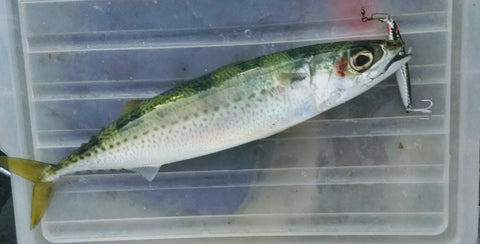
Then came the oddball catch. Andrew dropped the little jig again and, about a minute later, came up with a squid. Nobody should choose a 40 g knife jig as their first squid lure, but the catch demonstrates why small metals can be so entertaining: almost anything feeding on small prey is a possibility.

The underwater footage below shows the structure that remains on the seabed and helps explain why the wreck attracts bait and predators.
Then to Long Reef: Slow-Jigging a Burley Trail
With bait aboard, the crew continued to Long Reef. The 40 g jig now changed jobs. In roughly 15-20 m of water, Andrew's approach was to establish a burley trail, cast the jig back down that trail and work it slowly towards the boat.
That is very different from fast mechanical jigging in deep water. The small jig can be allowed to sink, lifted or wound in short stages, and kept around the depth where fish are responding to the burley. The aim is not to make the lure travel as fast as possible. It is to keep a small, wounded-looking target in productive water.

The 40 g jig suited this relatively shallow 15-20 m situation. On Sydney's deeper offshore marks Andrew has often used 100 g, 150 g, 250 g and heavier jigs depending on depth, current, drift and line diameter.
If you are choosing between those weights, use our practical jig-weight guide. For a deeper Sydney kingfish example, see Jigging for Kingfish on Sydney's Offshore Reefs.
40 g Jigs Are Also Excellent Casting Metals
One of the biggest advantages of a compact metal jig is that it does not have to stay underneath the boat. When pelagics are feeding on small bait at the surface, a 40 g jig can be cast into or beyond the activity, allowed to sink if necessary, and retrieved through the fish.
That gives the same lure two quite different roles: vertical micro jigging when the fish are below you and conventional casting when the action is moving across the surface.
Andrew had seen that versatility again only a month before the Sydney trip, when a 40 g jig produced this queenfish around Rainbow Beach:

Andrew has also caught tuna on the small metal:

This casting role is covered in more detail in our 40 g micro-jigging guide, along with slow lift-and-fall and faster pelagic retrieves.
An Unusual Extra: Jigging for Hairtail After Dark
One of Andrew's more unusual catches is hairtail on 40 g jigs. He adapted the setup for the species, adding a tail treble and a small red chemical light above the jig, then worked it after dark with short, sharp lifts.

It is a specialised example, but that is exactly why it belongs in this case study. The broader lesson is that jig size, hook placement and retrieve can be adapted to the species and situation rather than treating every small metal as a single-purpose lure.
When Is 40 g the Right Weight?
A 40 g jig only works if you can put it where the fish are and maintain useful control. Depth alone does not answer that question. Current, boat drift, braid diameter, lure shape and the target depth all influence how much weight is needed.
| What is happening | What it means for a 40 g jig |
|---|---|
| Shallow water, manageable current and a controlled drift | A strong use case for 40 g if the jig reaches the fish cleanly |
| Fish suspended above the bottom | You may not need a heavy jig if the 40 g lure reaches their actual depth efficiently |
| Fast drift or strong current creating a large line angle | Go heavier rather than insisting on fishing 40 g |
| Deep fish holding tight to compact structure | A heavier jig may reach the strike zone faster and keep the presentation under better control |
That matches what we have seen across years of Downrigger Shop fishing. A light system can be extremely effective in the right conditions, but there is no virtue in staying light once current and drift stop you fishing effectively.
Five Lessons From the 2018 Session
- Do not underestimate small jigs as bait catchers. A 40 g metal can be useful before the main fishing even starts.
- Change the retrieve to suit the job. Slow work in a burley trail and fast pelagic casting are completely different presentations.
- Use the sounder. The Centurion example starts with finding life around structure, not blindly dropping a lure.
- Let conditions choose the weight. Forty grams worked in the situations shown here; deeper or faster water can demand much more.
- One compact metal can cover a lot of water. Vertical drops, slow jigging and long casts can all be done without changing lure category.
Where 40 g Jigs Fit in the Downrigger Shop Range
Our original 40 g knife jigs were built around exactly this sort of light-tackle fishing. You can check the current 40 g jig listing and availability here.
If you need a different weight, browse the Knife Jigs collection. The collection and our jig-weight guide are the better places to compare weights; this article is intentionally about what actually happened with 40 g jigs on the water.
40 g Jig Fishing FAQs
Can you catch kingfish on a 40 g jig?
Yes. The Long Reef catch in this 2018 report is one example, and Andrew has caught kingfish on the same weight during other suitable sessions. The important limitation is whether a 40 g jig can reach and stay in the strike zone in the conditions you are fishing.
Can a 40 g jig be used to catch live bait?
It can. On the Centurion Wreck session a 40 g jig produced useful bait before the crew went kingfish fishing. It is not a replacement for every dedicated bait rig, but small predatory baitfish can readily attack a compact metal.
Can I cast a 40 g jig instead of jigging it vertically?
Absolutely. Casting is one of the most useful secondary roles for a small metal jig, particularly when bonito, tuna, mackerel, mahi mahi or other pelagics are feeding on small bait near the surface.
How deep can I fish a 40 g jig?
There is no reliable depth number that applies every day. Current, drift, braid diameter, jig shape and where the fish are holding all change the answer. If the jig is being swept away from the strike zone or takes too long to reach the fish, move to a heavier weight.
Where is the Centurion Wreck in Sydney Harbour?
A useful Heritage NSW reference position for the Centurion Wreck is 33° 49.057′ S, 151° 16.863′ E, or -33.817611, 151.281056 in decimal degrees. The wreck lies inside North Head in approximately 18-19 m of water. Locate it with a current chart and sounder, avoid anchoring near the protected wreck and do not disturb the remains.
Is this the main Downrigger Shop guide to micro jigging?
No. This page follows a specific 2018 Sydney session and several related catches. For the full technique, tackle and setup guide, go to Micro Jigging in Australia: How to Fish 40 g Jigs.
Explore Sydney’s wrecks
The Sydney wreck fishing marks guide includes Centurion and other wrecks around Sydney. Compare depths and reported species, then open a wreck on the map.
Next step: Start with the 40 g micro-jigging guide if you are learning the technique, use the jig-weight guide if you are choosing a weight, or browse our knife jigs to see the current range.
Also in Tackle News


Target: Kingfish
Two Sydney offshore sessions targeting kingfish with live yellowtail and heavy knife jigs, including fish to one metre, sharks and an amberjack.


Mackerel, Kingfish and Sharks
TUESDAY! Wanted to downrig small live bonito around Long Reef for a stud kingfish. Our purple trolling lures accepted the challenge:


